
Greetings.
I am a man in a suit who has fallen into the world of Minecraft.

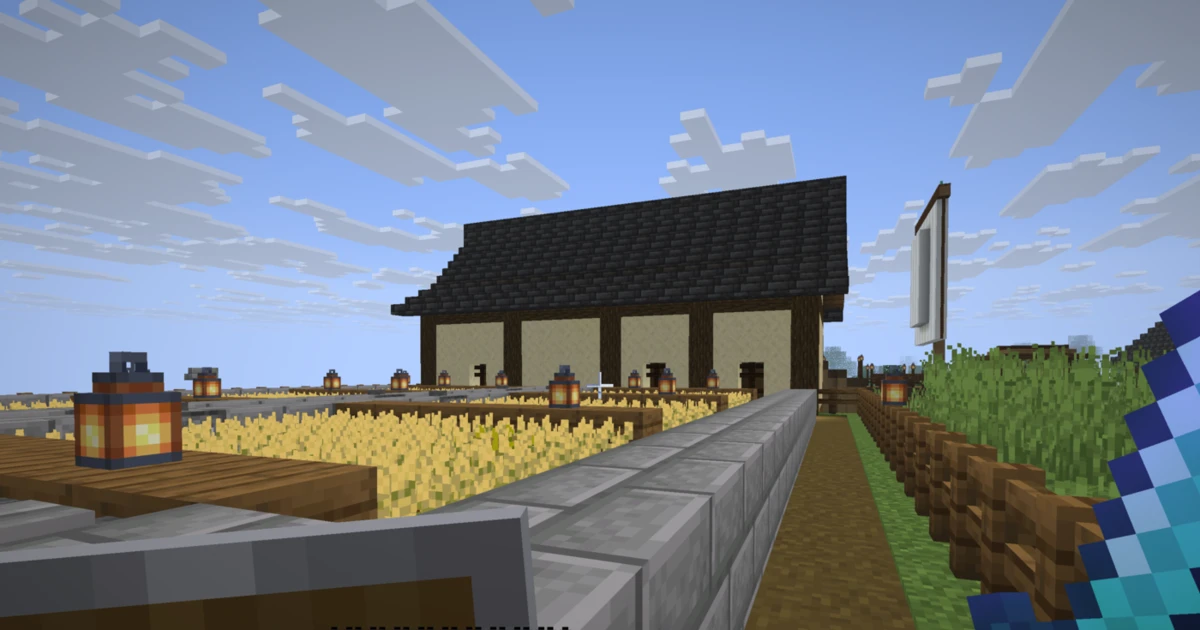
This time, a little glimpse of the finished result first.
A watermill hut with a large wooden wheel now stands beside the water in our castle town!
Last time, I explored a desert pyramid and returned to town with a camel.
Now I would like to build somewhere in town to grow wheat and enjoy a loaf of bread.
Building a tile-roofed watermill hut with a big wooden wheel
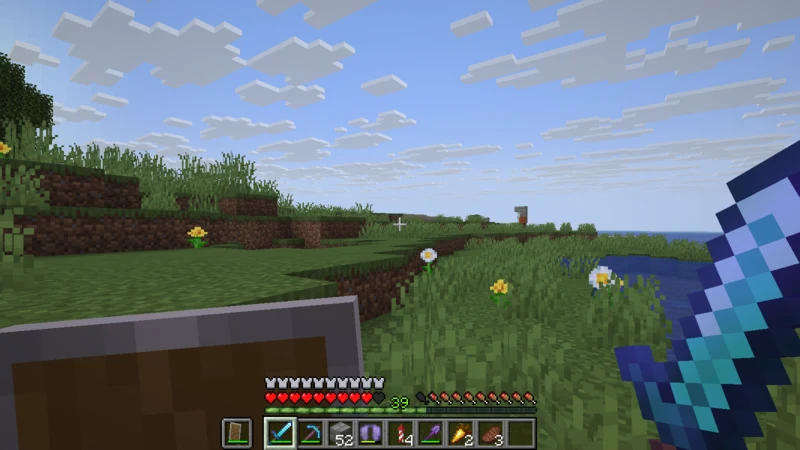
Let us go back to the bank before work begins.
Southeast of the port, this is still a patch of grass and flowers.
A hut by the water with fields behind it should be rather nice.
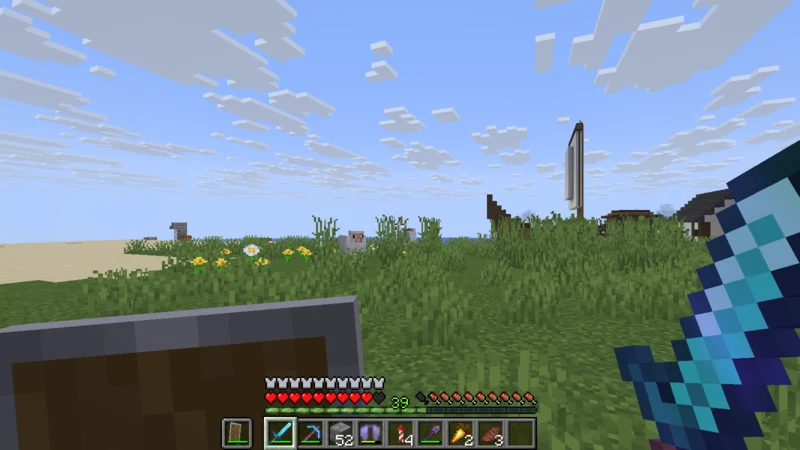
East of the hut site is a raised meadow full of grass and flowers.
There are sheep here, too.
I will turn this into wheat fields—a little landscape of food growing for the town.
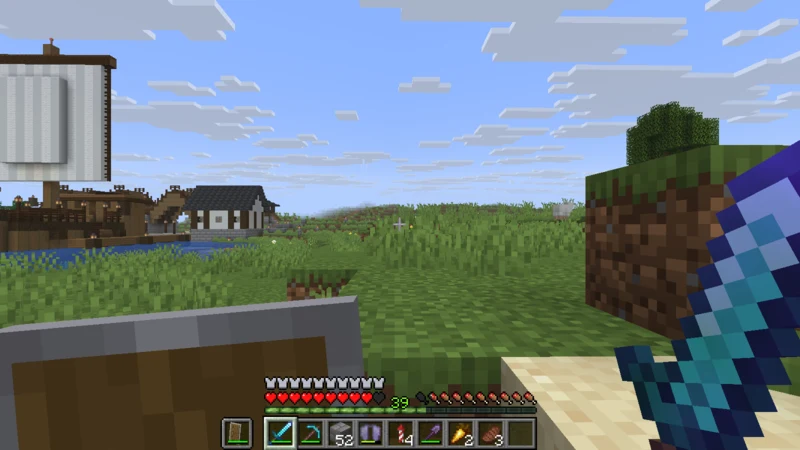
From the south, the sailing ship and port buildings are just across the water.
Another building will join the waterfront we have been putting together.
I would like the wheel to stand out beside that great sail.
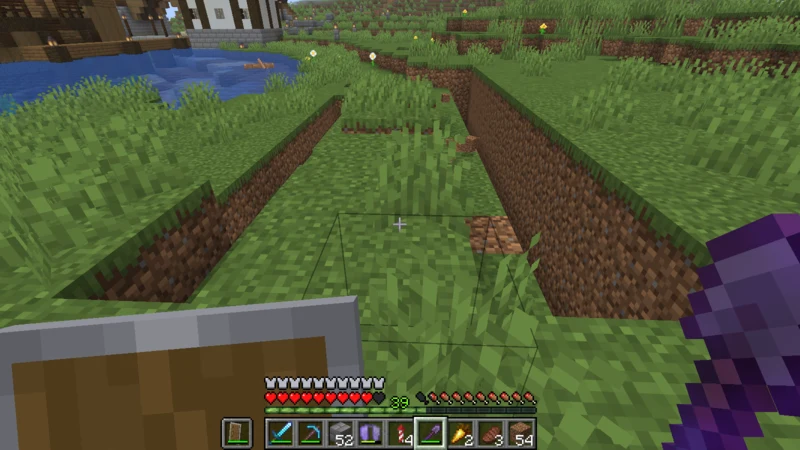
First, I dig out the water basin beneath the wheel and the space for the hut floor.
The long holes in the grass make the size of the building easier to picture.
It may be called a hut, but this is quite a footprint…
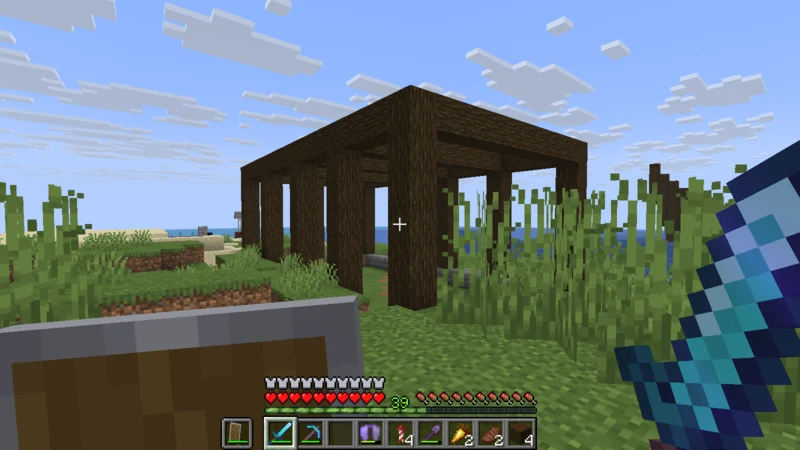
Dark posts and beams go up on the stone base.
Once the frame is standing, it suddenly looks like a house.
Though I can still see straight through it, of course.
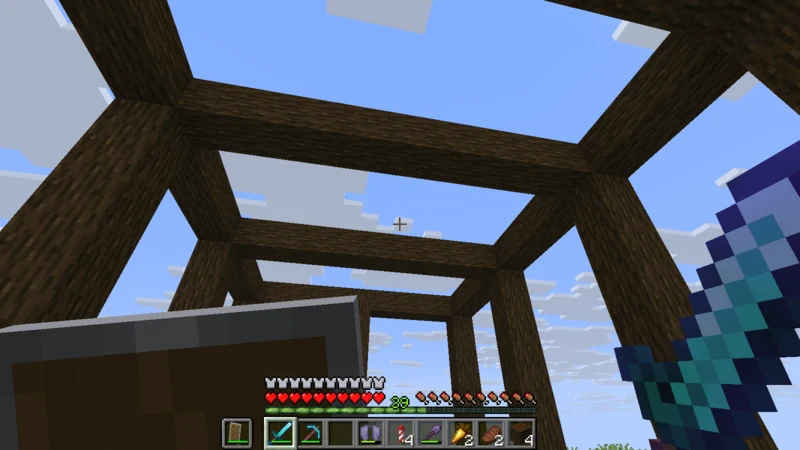
From inside, thick beams line up overhead.
I want to keep this timberwork visible after the roof goes on.
I do enjoy looking at a frame like this.
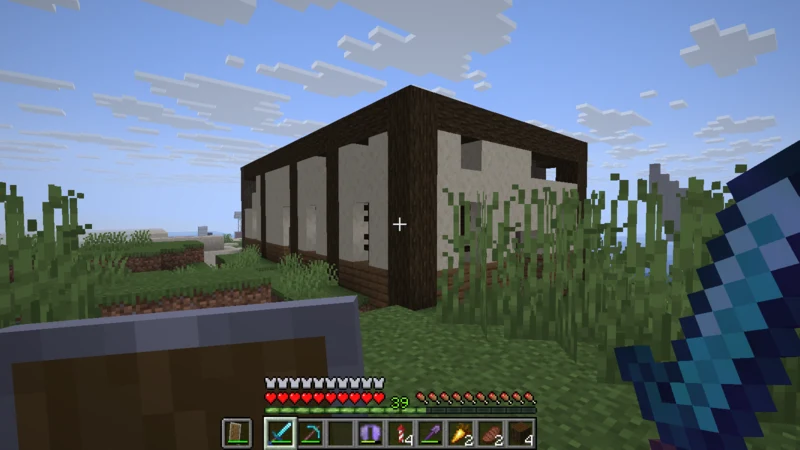
Wooden wainscot goes below, with pale plaster-like walls above.
The light panels between dark posts should fit our Japanese-style town.
I fill in the walls, leaving openings for doors and windows.
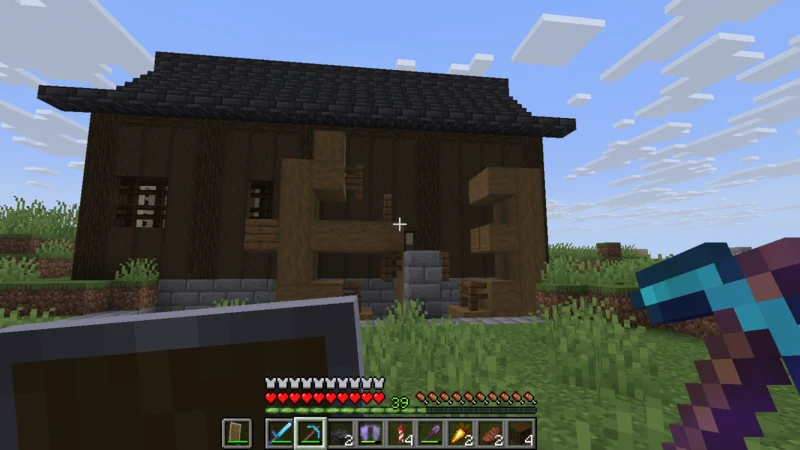
With the curved tile roof in place, I build the wheel against the river-facing wall.
Even the lower half and spokes look rather large.
Making something round out of square blocks takes some thought.
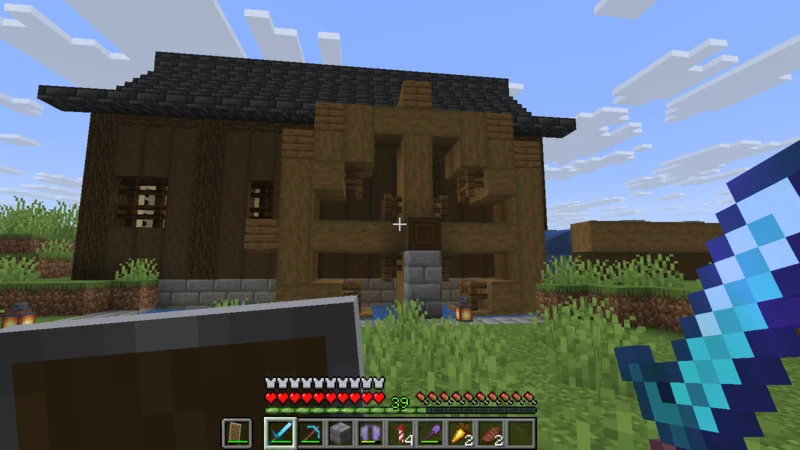
Join the rim, and… there is our big waterwheel!
This wheel is decorative, though; it does not turn.
The light wood makes its outline clear against the dark boards.
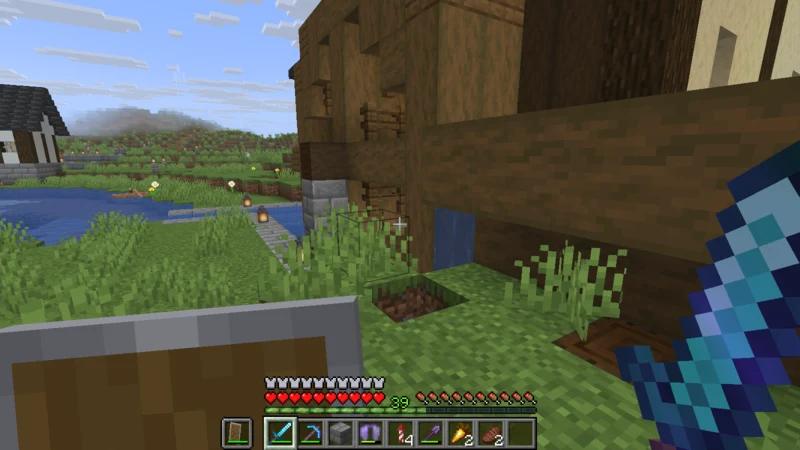
Water falls from the wooden flume beside the wheel.
It comes from a pond through a channel, then flows from the basin below toward the river.
Even with a stationary wheel, the flowing water gives this place a watermill feel.
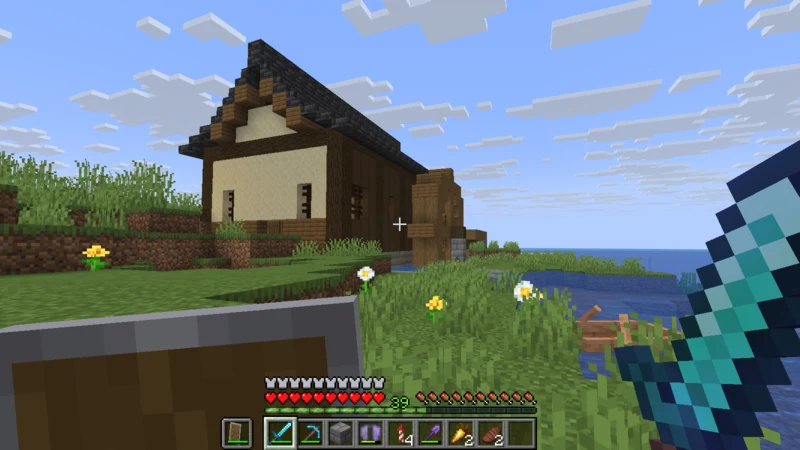
Another look from the north bank where I stood before construction.
A tile roof and a large wheel now rise where there was only grass.
There is a new reason to take a detour along the water.
Golden wheat fields, and a button-operated water harvest
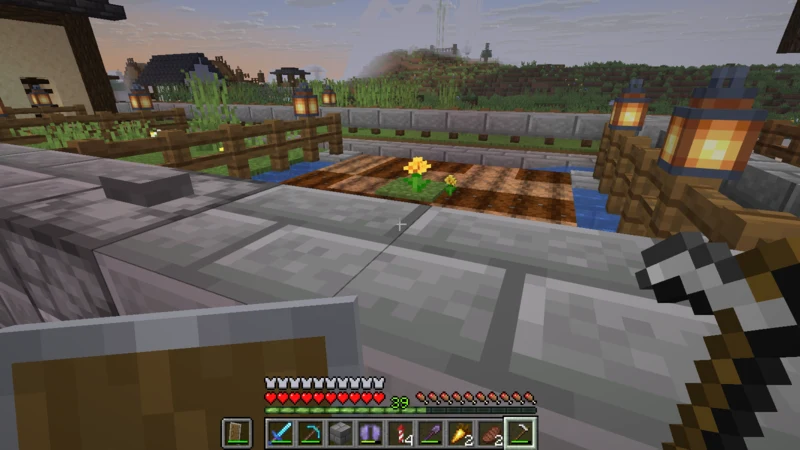
Next come the fields east of the hut.
Each plot has five rows of six plants: 30 plants, with six plots in all.
I run water between the plots, till the soil, and sow the seeds.
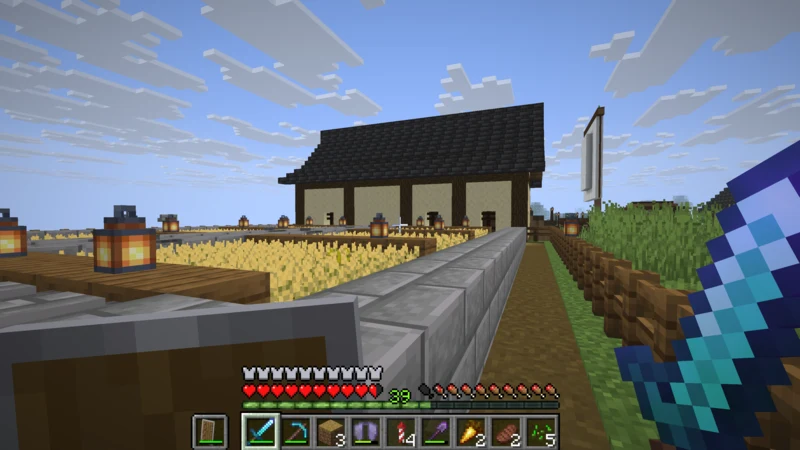
After some time growing, gold spreads across the fields.
What a lovely sight!
Rows of wheat in front of the tile roof make this feel like a town to live in.
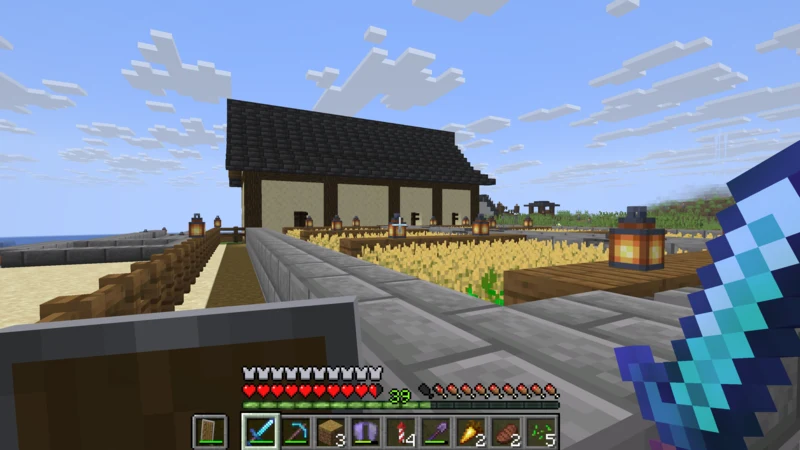
I take a look from the other side, too.
Rows of wheat stretch between the wooden dividers and lanterns.
I could keep admiring them, but my stomach has other ideas.
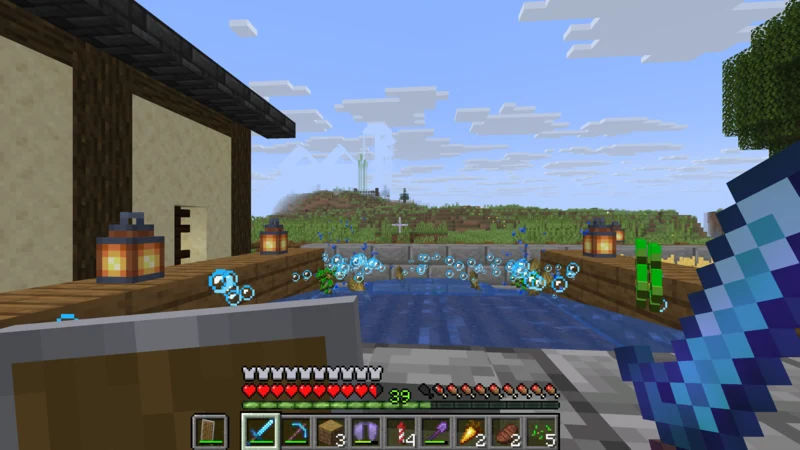
I press the button at the head of the plot, and water pours from the dispenser.
The ripe wheat and seeds rush toward the channel together!
A second press takes the water back, leaving the plot ready for sowing again.
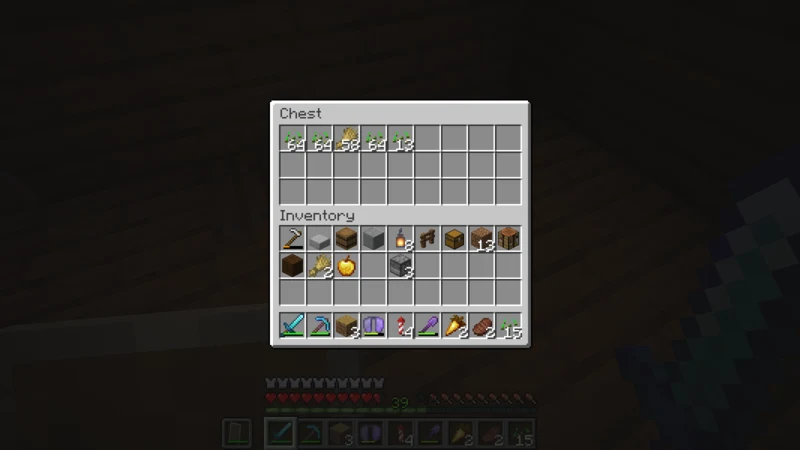
Opening the chest beneath the floor, I find wheat and seeds inside.
It is satisfying to see the water carry them all the way to storage underfoot.
Anything that bounces onto a divider or stays behind still needs picking up by hand.
Bread from the harvest, and another morning with the fields and hut
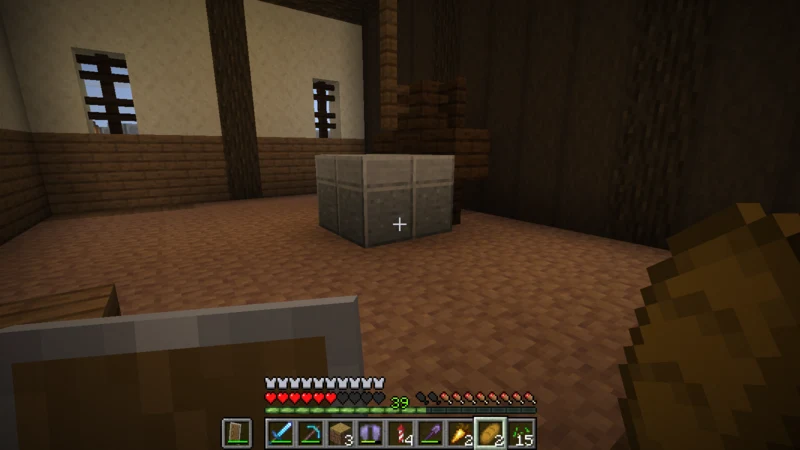
The next morning, I head inside with bread made from the harvested wheat.
I have made two loaves, and eat one of them.
Filling my stomach from my own field is a comforting little moment.
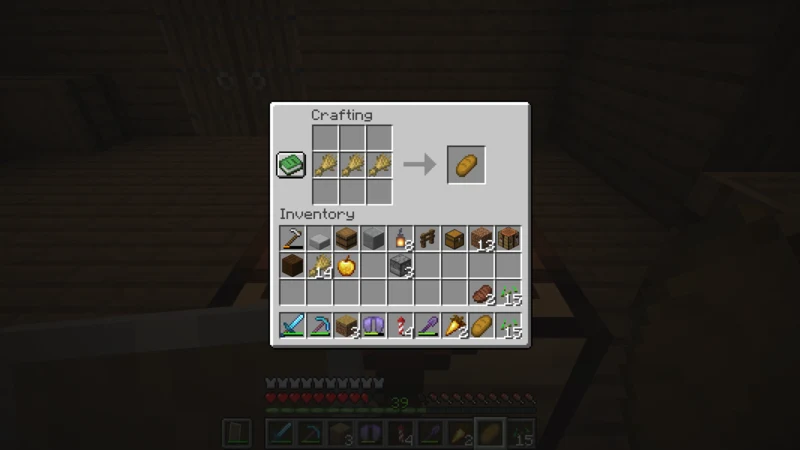
Here is the bread recipe.
Three wheat in a row on the crafting table make one loaf.
I make it at the table, rather than grinding flour with the millstone in the hut.
The official Minecraft article about bread also describes crafting it from three wheat.
Having just one ingredient is rather handy.
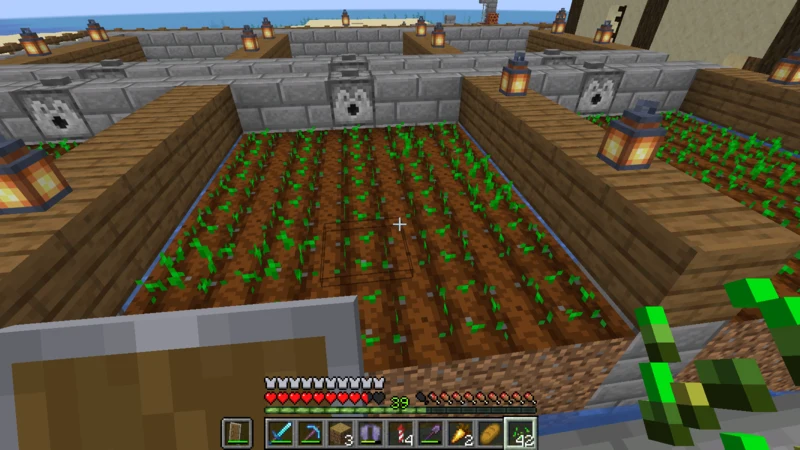
I take seeds from storage and replant the harvested plots, one plant at a time.
Sowing is still a job for my own hands.
Water makes harvesting easier, but tending the field is still my responsibility.
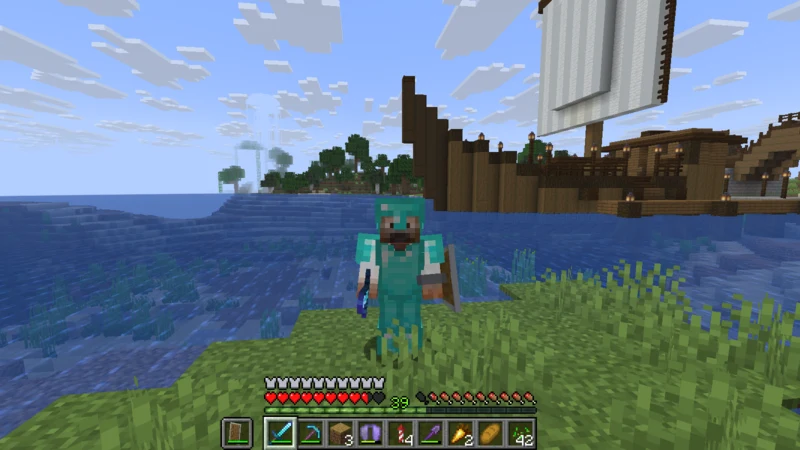
A picture with the bay and sailing ship behind me.
Adding fields and a hut brings another bit of everyday life to this waterfront town.
After an adventure, a little time with the soil is rather nice.
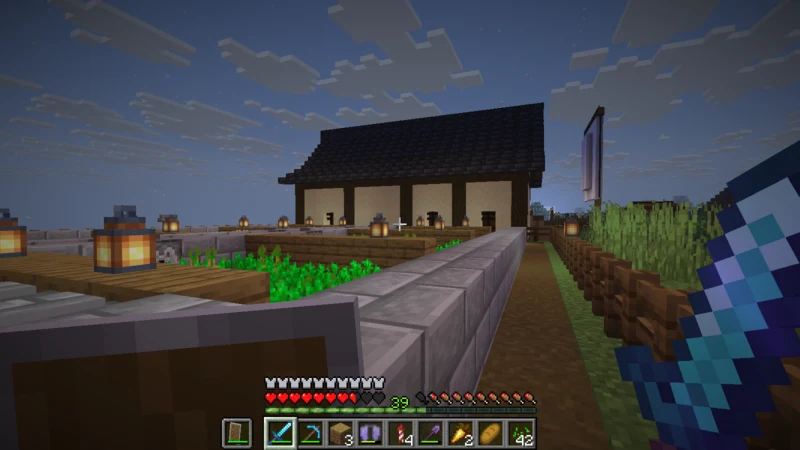
As the sky darkens, the field lanterns begin to stand out.
The golden wheat has become small sprouts again, and now the lights take the lead.
There is another crop to look forward to.
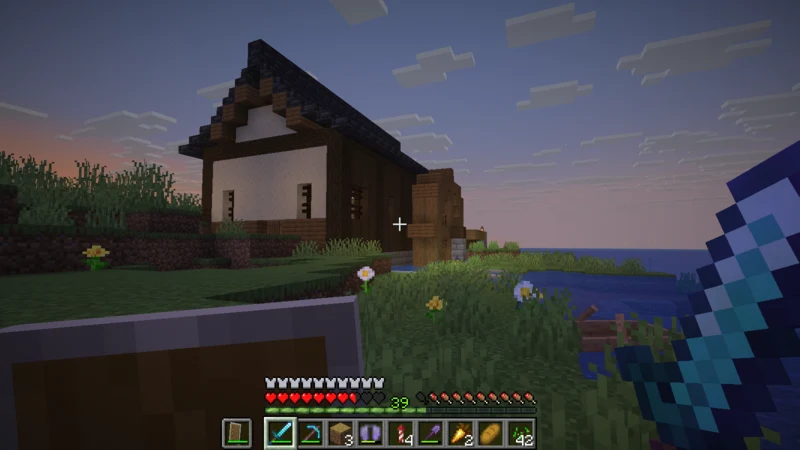
I take a look at the hut under the dawn sky, too.
The tile roof rises beyond the flowers, with the wheel beside the water.
Quite a change from that empty bank at the beginning.
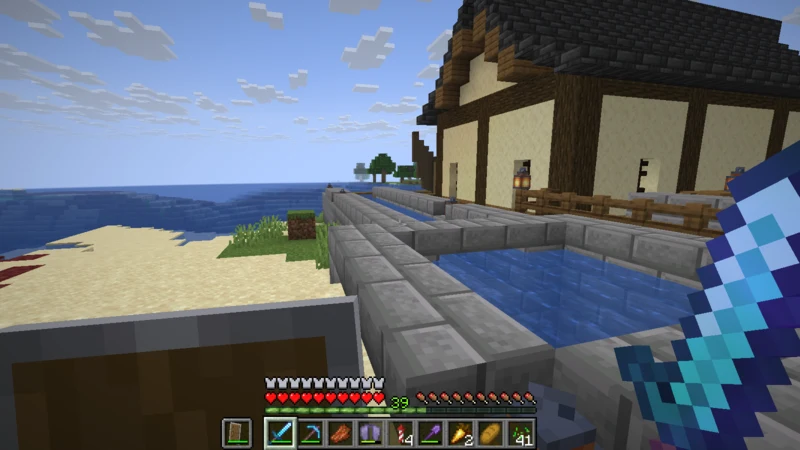
In the morning light, I also look at where the water comes from.
A channel leads from the stone-lined pond toward the hut.
This is not a system pumping water from the river; the water goes from here to the flume.
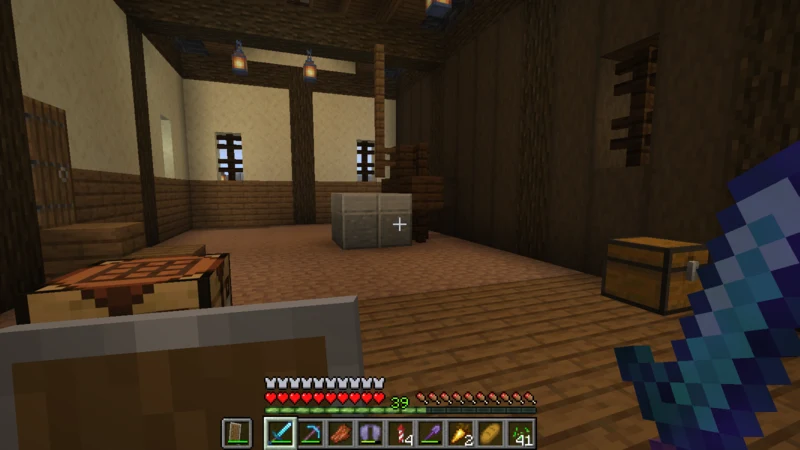
In daylight, the plank-floored workspace is in front, with the millstone on the earthen floor beyond.
Both the millstone and gears are decorative, but lanterns hanging from the beams give it an old workshop feel.
The crafting table for making bread is here, too.
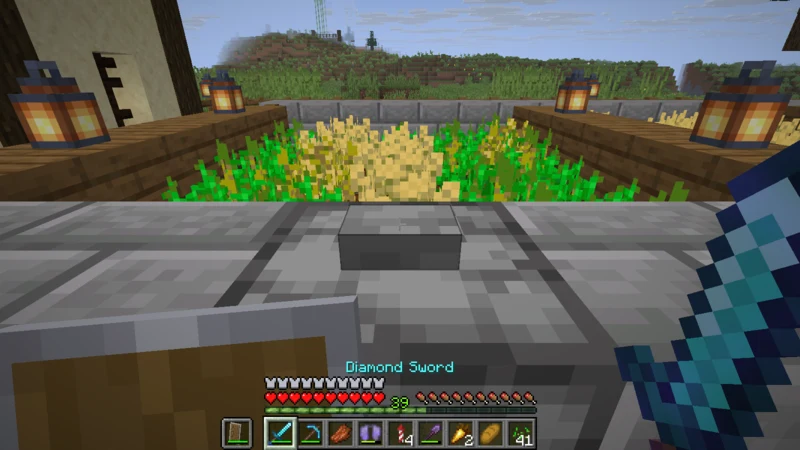
This is the stone button I press by hand at harvest time.
A water bucket in the dispenser below releases and retrieves the water.
This plot is still growing, so I leave the button alone for now.
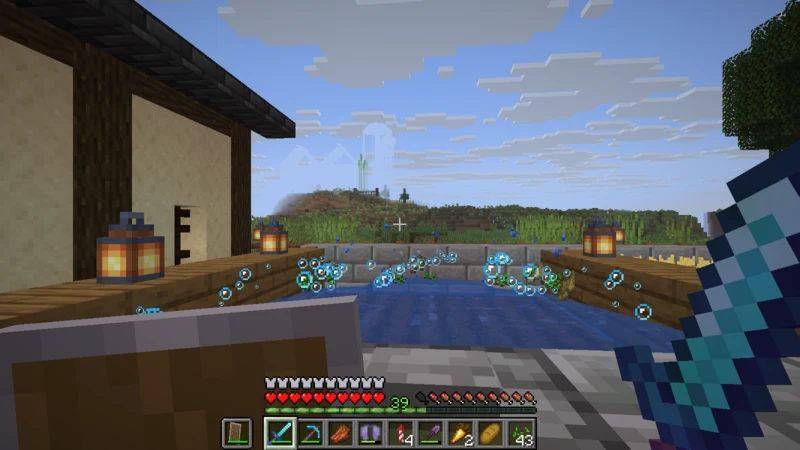
Later, I press the button again for a ripe plot on the north side.
Wheat and seeds drift away on the water.
How much will reach the storage beneath the hut?
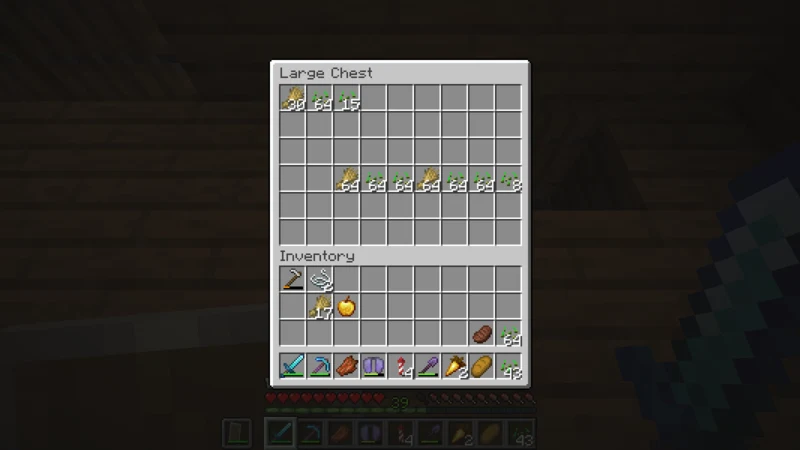
At the top left of the north large chest are 30 wheat and 79 seeds from this plot.
The stacks farther down were already there.
Keeping them separate, even a single plot makes for a pleasing harvest.
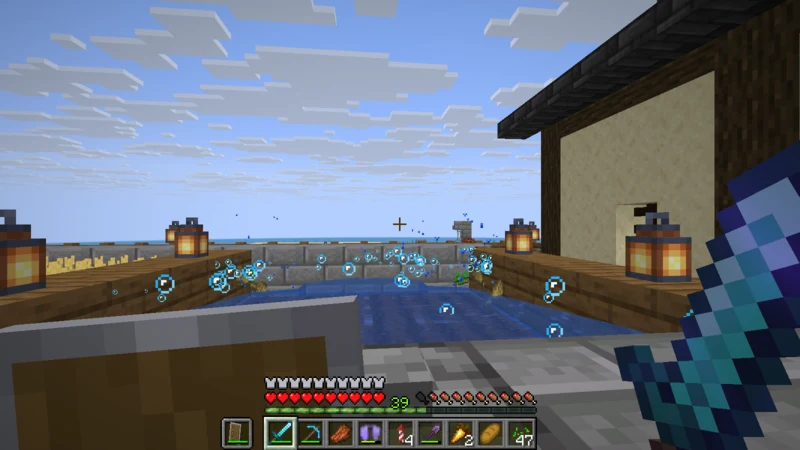
Next, I release water over a ripe plot on the south side.
Most of the crop goes toward the channel, but one wheat bounces out and stays behind.
I pick that up by hand, bringing this harvest to 30 wheat as well.
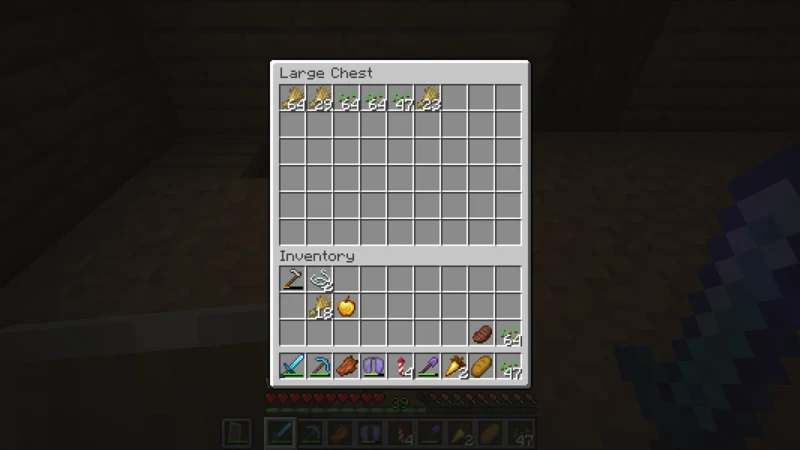
Wheat and seeds have collected in the south large chest beneath the floor, too.
There are earlier harvests in here, so not everything shown comes from this one plot.
After harvesting, I replant the seeds here as well.
Admiring a decorative waterwheel, and eating bread from my own wheat.
The town has another place I want to come back to.
Next time, I would like to enjoy the growing fields along with the view of the port.
That is all for this time.
Greetings.