
Greetings.
I am a man who has fallen into the world of Minecraft.
In OjiCra Season 3, I had been placing torches around the village houses to help protect the villagers.
Once the village felt a little brighter at night, I finally had room to think about more than simply keeping everyone safe. I could start thinking about living together.
That was when I approached the villagers with bread in my hand.
Bread.
Bread matters in Minecraft.
It matters in my world too. (laughs)
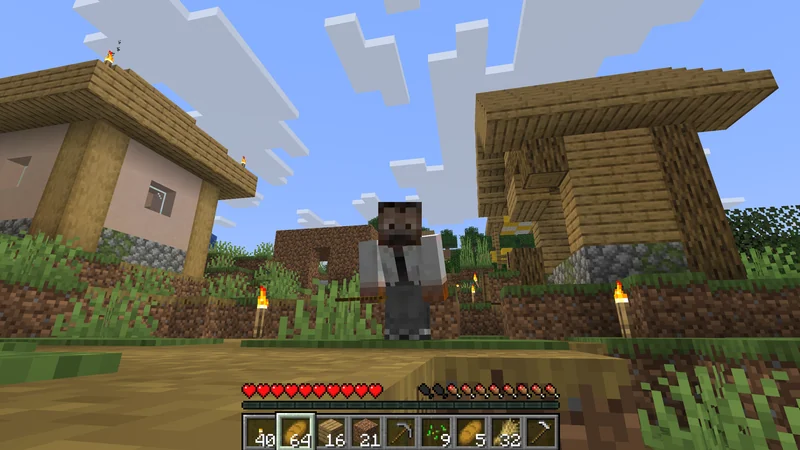
Here I am, bowing in the village with bread in hand.
I am not here to fight anything.
Today, I simply want to get a little closer to the villagers.
I Tried Giving Bread to the Villagers
The first important thing was that the village had settled down a little.
There were torches around the houses, and I could see the village clearly in daylight.
It felt different from the days when the dangers of the night occupied all my thoughts.
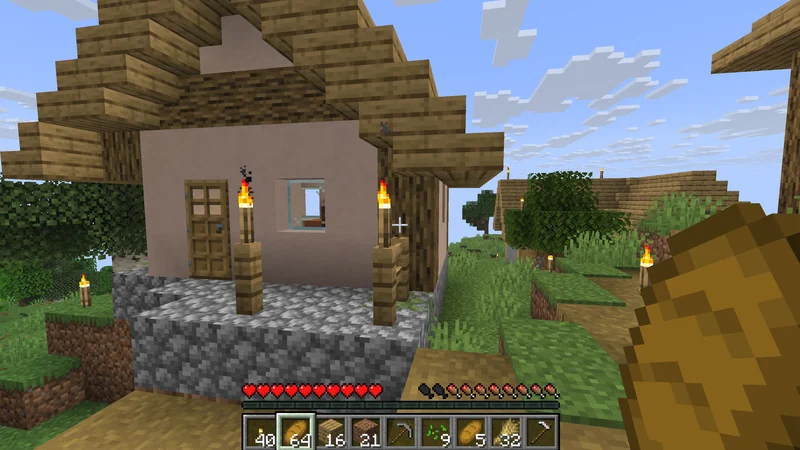
I stood in front of a torch-lit house holding bread.
To give bread to villagers, I did not use it on them directly. I dropped it so they could pick it up.
To me, it felt almost like bringing them a small gift.
“Here, have some bread.”
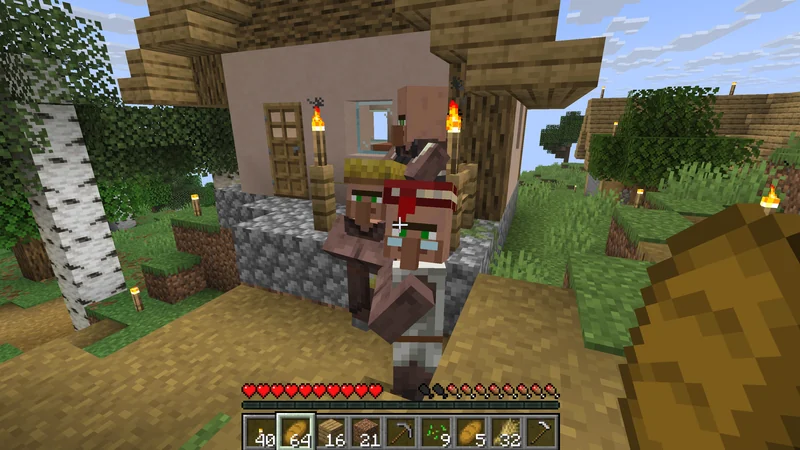
That is close.
Very close, villager.
I had bread, but I had no idea what the villager thought of me.
At least we were not enemies.
That alone was reassuring.
As I handed out bread, the villagers came closer.
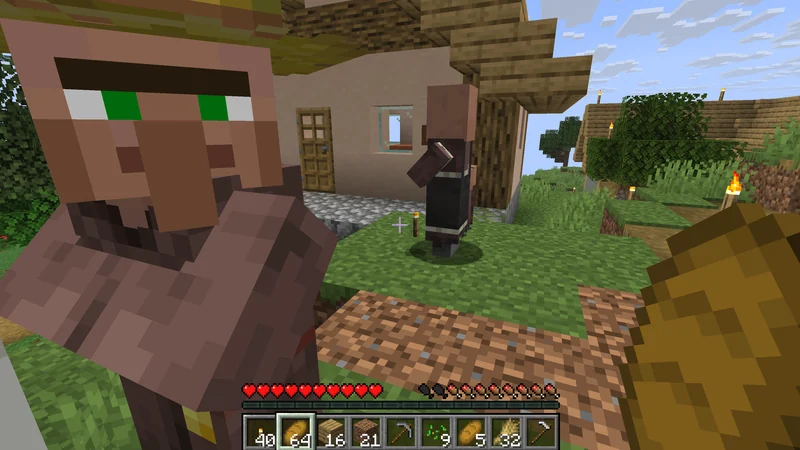
It felt as though the distance between us had become a little smaller.
Perhaps it was only a feeling.
But village life in Minecraft is full of moments like that, and they matter more than you might expect.
Bread Is Not the Only Thing That Matters: Beds and Safety Do Too
Giving villagers food did not seem to be the only condition involved in growing the village.
When I checked the Minecraft Wiki on July 2, 2026, its explanation said that food, beds, and other conditions are involved when villagers breed.
Bread counts as villager food, along with carrots, potatoes, and beetroot.
The Wiki described bread as worth four food points, while carrots, potatoes, and beetroot were worth one point each, with twelve points given as a guideline.
That makes about three loaves of bread one useful reference point.
However, this does not mean that throwing exactly that amount will always produce a baby villager.
The villagers’ state, an available bed, and the space above that bed also appear to matter.
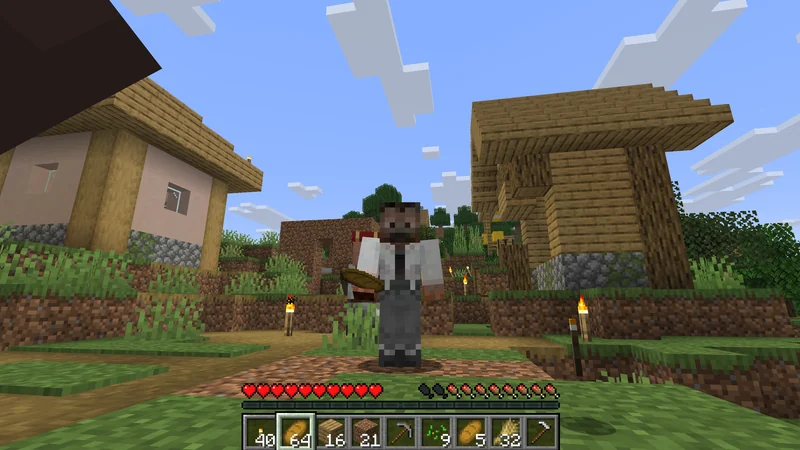
Here I am standing in the village.
There are houses, paths, torches, and villagers.
Once bread and beds enter the picture, it suddenly feels as though I am managing the village.
I am not the mayor.
Still, I cannot help feeling a little responsible. (laughs)
Safety was another important part of our experience.
It would be a problem if the village grew only for zombies to arrive at night.
Even if a baby villager is born, dark spaces around the houses remain worrying.
As I wrote in our field notes on protecting villagers with torches and spawn-proofing, making the village brighter before trying to increase its population felt very important.
A Baby Villager Appeared
Then came the happiest moment of this experience.
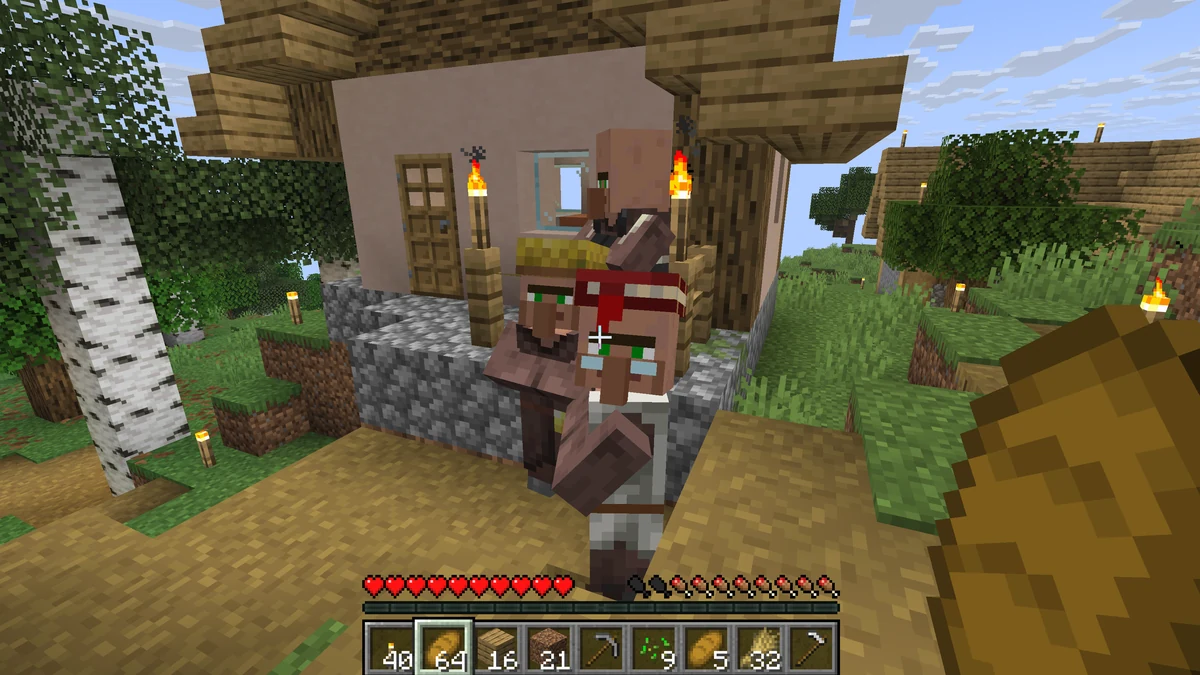
While I was handing out bread, a small villager appeared in the village.
A baby villager.
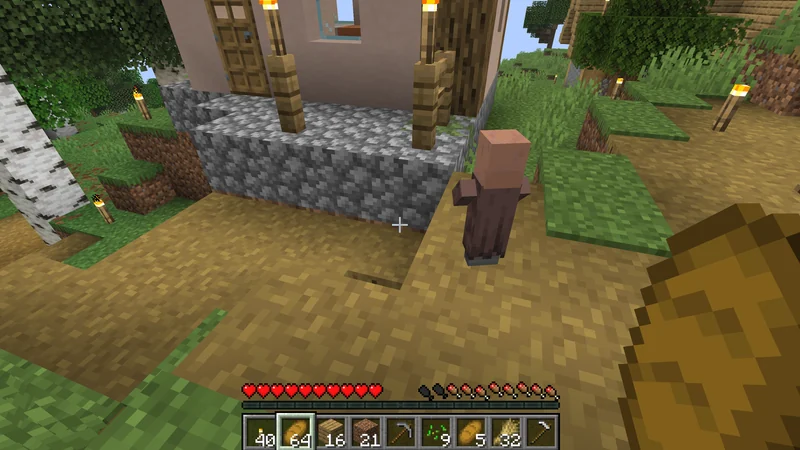
It is a little difficult to see toward the back of the image, but the villager has a large head and a small body.
It really is a baby villager.
What a wonderful sight.
I was especially happy because I still regretted losing villagers earlier in the season.
But my first thought was not only, “The village grew!”
It was, “Now I have to protect this little one.”
A baby villager made nighttime safety and the area around the houses feel even more important.
It is wonderful when the village becomes livelier.
But the livelier it becomes, the more carefully I need to watch over it.
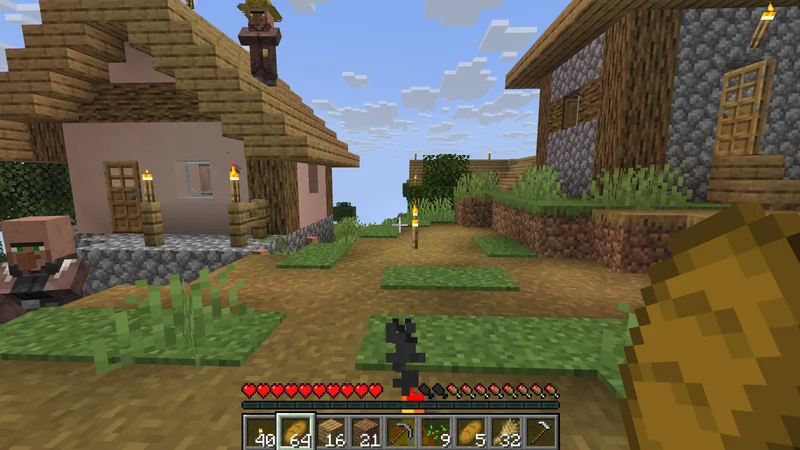
From farther back, it looked as though the village was becoming a village again.
There were houses, fields, paths, villagers, and now a baby villager too.
Our Season 3 village finally seemed to be taking its first step from a village we protected toward a village we could help grow.
A Checklist From Our Experience
Based on what happened, these are the things I would check before and after giving villagers food:
- Make sure the villagers have safe places to walk.
- Place torches around houses and paths to reduce dark areas.
- Prepare food such as bread, carrots, potatoes, or beetroot.
- Drop the food where villagers can pick it up.
- Check whether there appears to be an available bed.
- Make sure the space around the bed is not blocked.
- If a baby villager appears, review nighttime safety once more.
This is not meant to be a complete step-by-step guide.
Still, while actually living in the village, this order felt important.
Food alone is not enough. Beds matter too.
And beds are not enough without safety.
Helping villagers increase their population is closely connected to protecting the village.
Read the Episode Where We Handed Out Bread
These notes are based on what happened in OjiCra Season 3 Episode 15.
That was the episode where we handed out bread, a baby villager appeared, and the village became a little livelier.
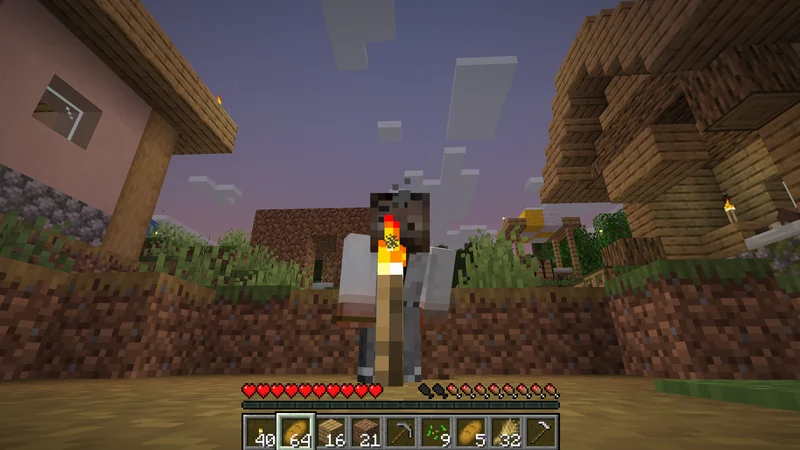
I approached with bread, and the village changed a little.
I changed a little too.
Instead of merely finding a village and celebrating, I was beginning to protect it, help it grow, and live there.
Minecraft villagers are far deeper than I first imagined.
That is all for today.
Farewell.