
Greetings.
I am a man in a suit who has fallen into the world of Minecraft.
Last time, I built a Japanese-style lighthouse on the northern cape to enjoy its evening lights.
Today I am back in town, building a workshop that turns Sugar Cane into Paper.
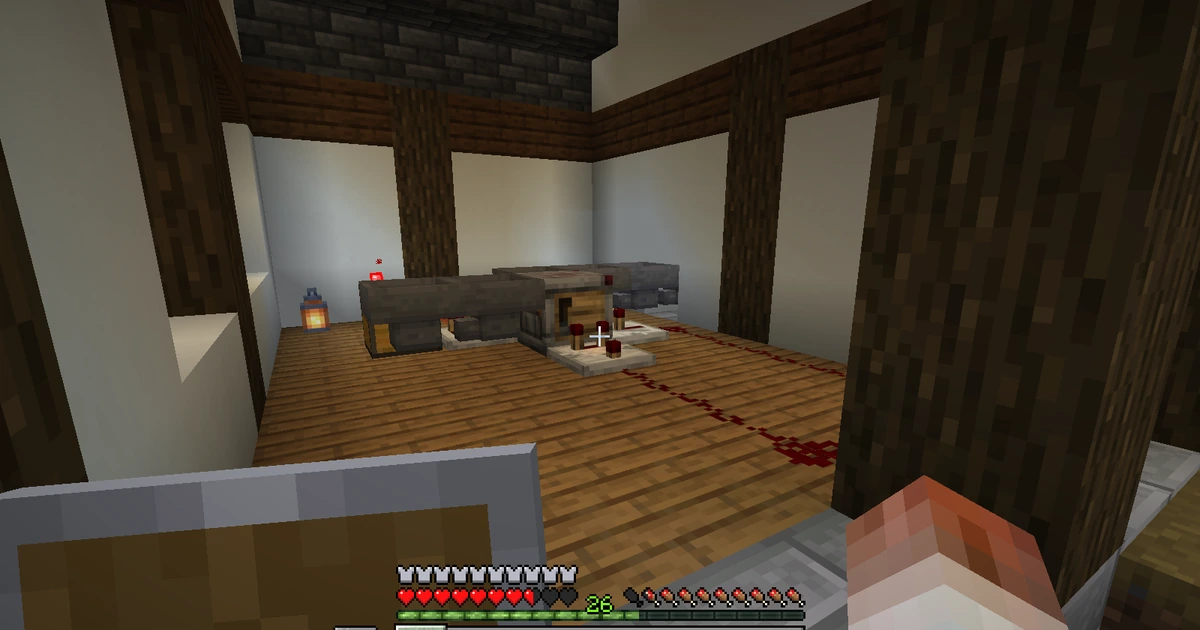
First, a little look ahead at the finished place.
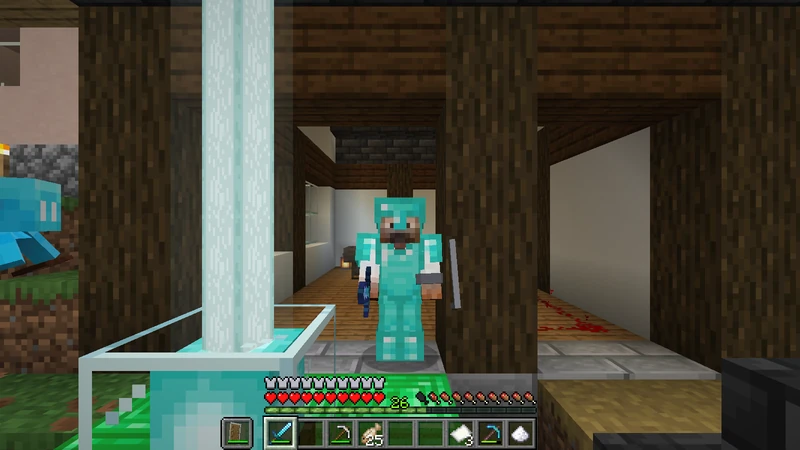
Here I am outside the paper workshop beside the beacon.
Inside is a Crafter and a system for making Paper from Sugar Cane.
Now, back to the farm before the preparations begin.
From a Full Collection Chest to Paper and Emeralds
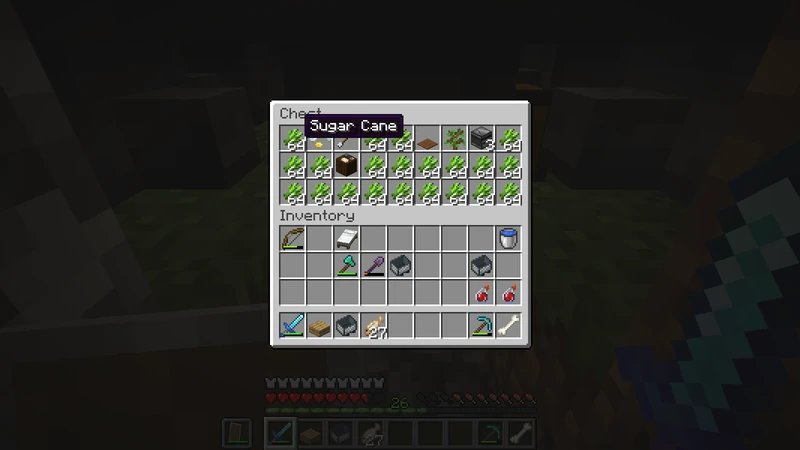
I open the chest at the automatic Sugar Cane farm from Episode 54, and it is packed.
Saplings and other items are mixed in with the cane, leaving no empty slots.
Even a working farm eventually runs out of somewhere to put things.
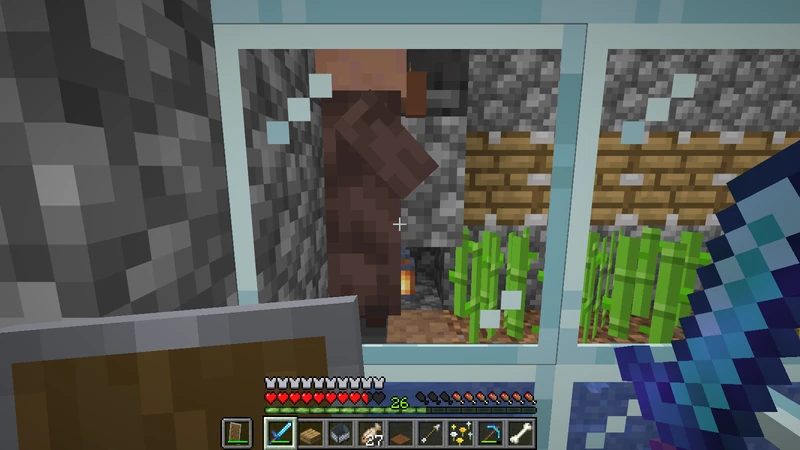
Oh, what is the Cartographer doing here?
He is in the channel in front of the farm, behind the glass.
Before making Paper, I would rather get him out of there.
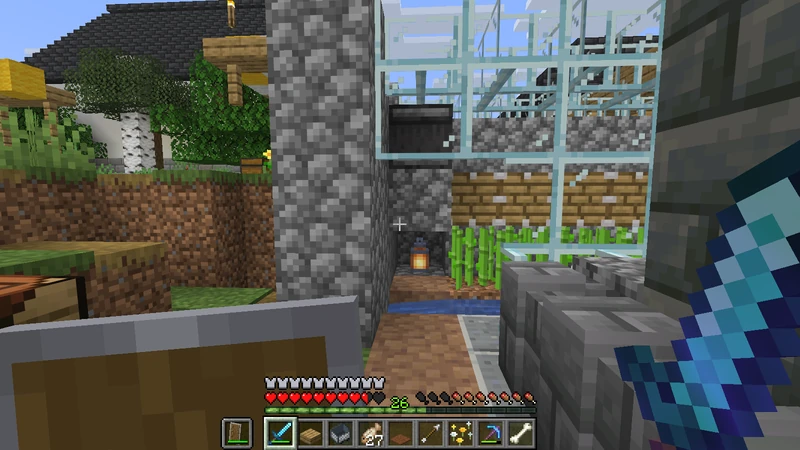
I remove two glass panes, and he walks out on his own.
This picture shows the opening I make.
I do not know how he got inside, but I am glad he can leave.
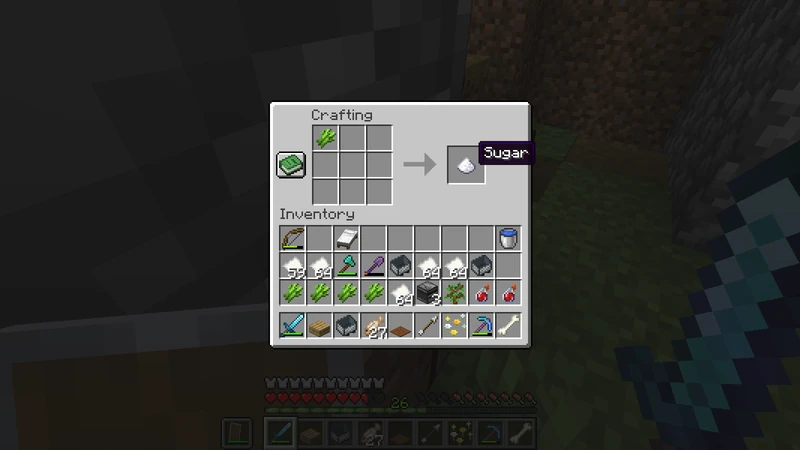
At the crafting table, one Sugar Cane gives me Sugar.
Paper uses the same ingredient, but needs a different arrangement.
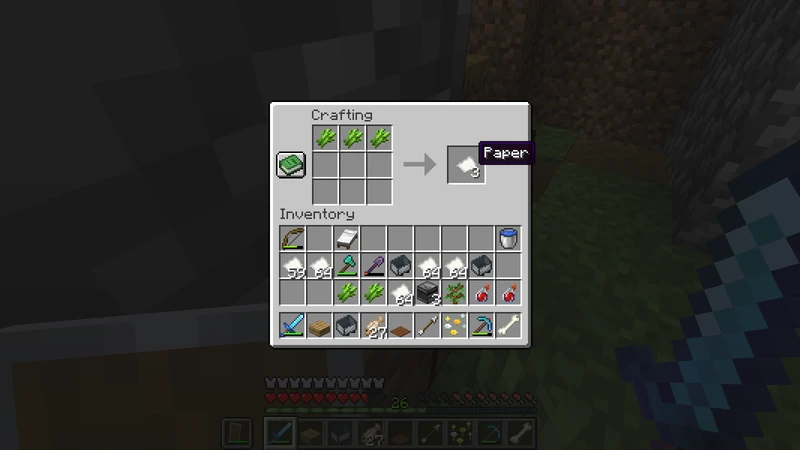
Three pieces in a horizontal row give three sheets of paper.
I make some by hand first and take it to the Cartographer.
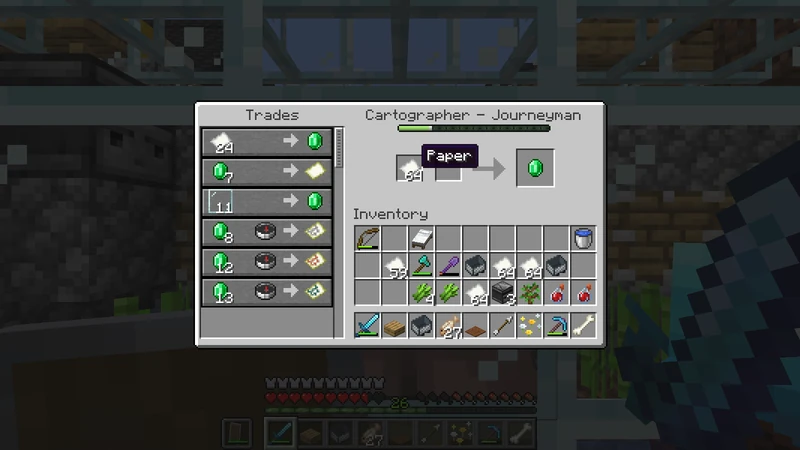
This offer is twenty-four sheets of paper for one Emerald.
I sell 288 sheets of the paper I make by hand and receive twelve Emeralds.
It is pleasing to turn something sitting in a chest into something useful around town.
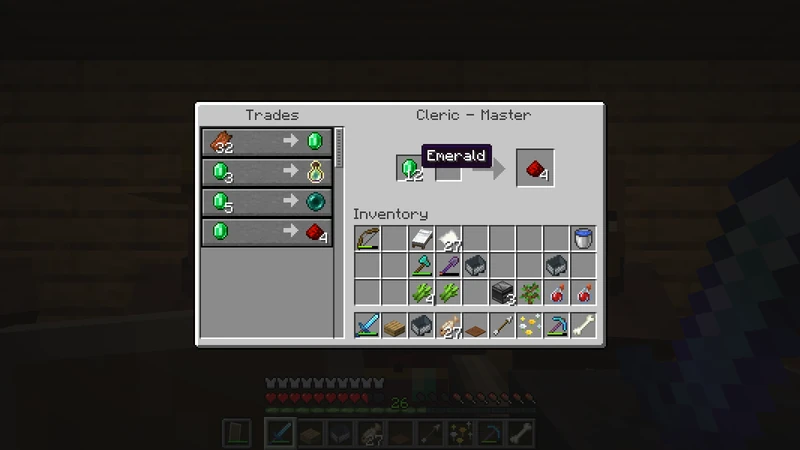
I buy redstone from the Cleric at the trading hall.
This screen offers four pieces of Redstone Dust for one Emerald.
The trades are already helping prepare the paper machine.
Waiting for Three Sugar Cane Before the Crafter Acts
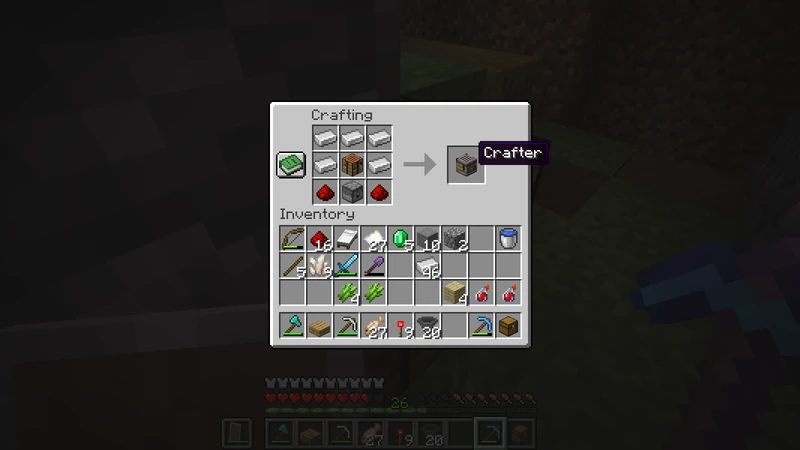
The Crafter is the main piece of equipment today.
I make one with five Iron Ingots, a Crafting Table, two pieces of Redstone Dust and a Dropper.
Using a crafting table as an ingredient seems rather fitting.
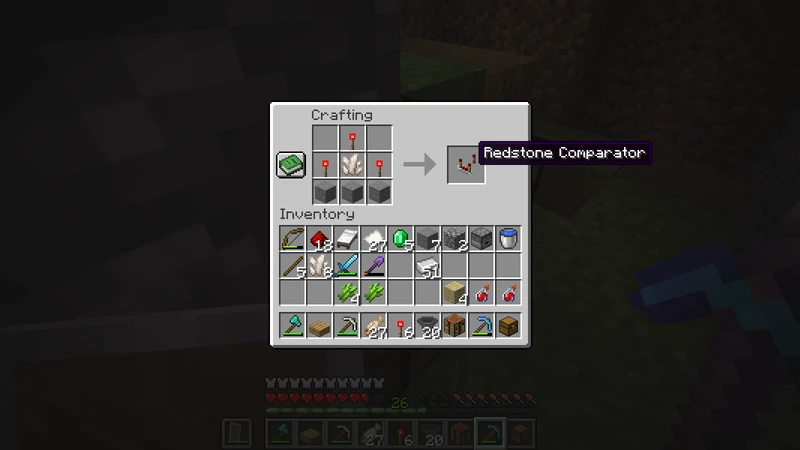
I also make comparators with Redstone Torches, Nether Quartz and Stone.
The parts for a circuit that responds to its contents are coming together.
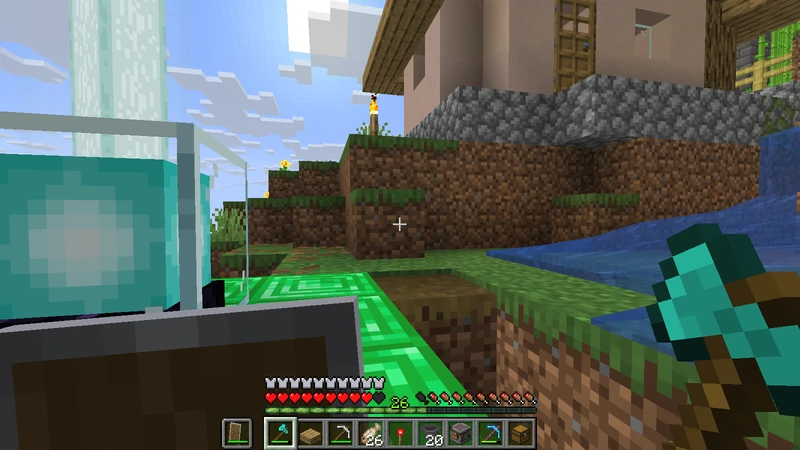
The workshop goes east of the farm, beside the beacon.
I dig the ground down to match the plaza.
It should fit in as another little workplace in town.
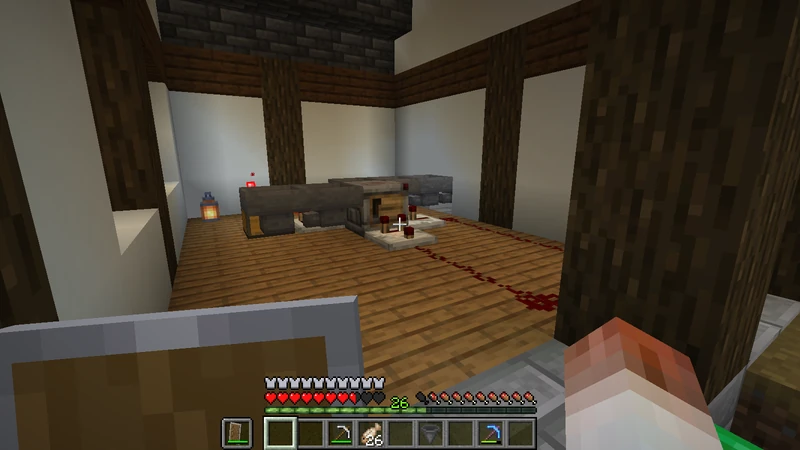
White walls, dark wooden pillars and a tiled roof surround the machine.
Inside are the input hoppers, Crafter, comparators and a chest for the Paper.
With redstone lines across the floor, it begins to feel like a workshop.
The official Minecraft article about the Crafter explains redstone pulses, hopper input and disabling slots.
I also pay attention to the output direction while putting together this particular paper machine.
In this circuit, a nine-block-long trail of redstone dust leads from a comparator through a repeater to the Crafter.
I want it to act when three pieces of cane are lined up.
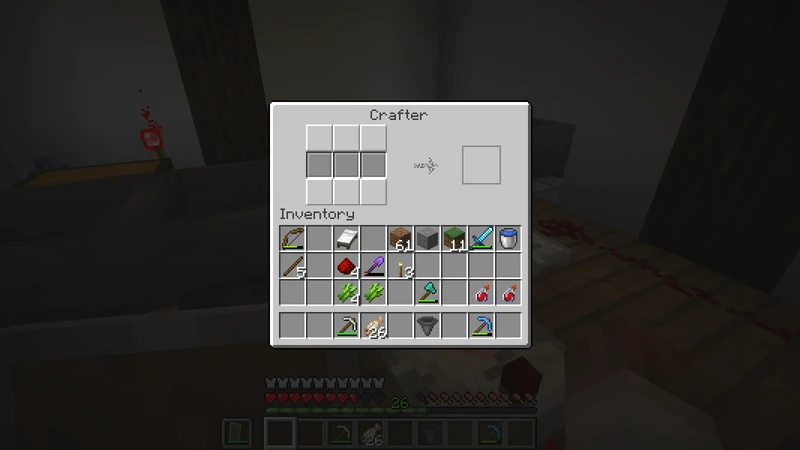
I disable the six slots in the top and bottom rows.
Only the middle row stays available, ready for the horizontal Paper recipe.
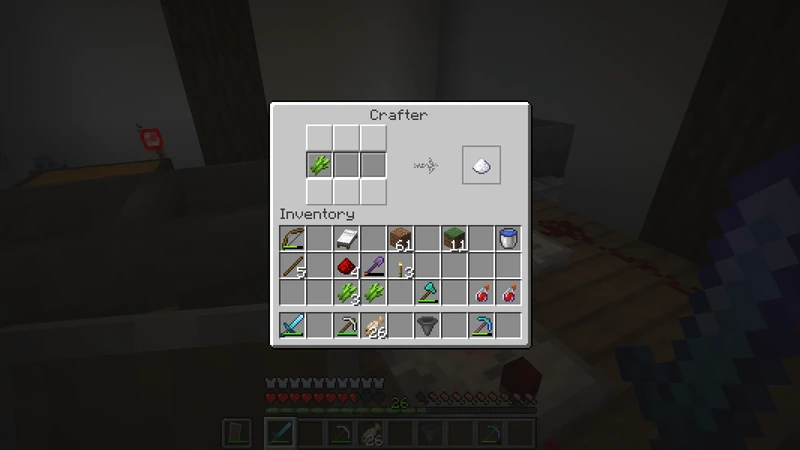
First, I put in one piece and press the button.
That makes Sugar instead.
Choosing the slots is only part of it; I also need to wait for three pieces.
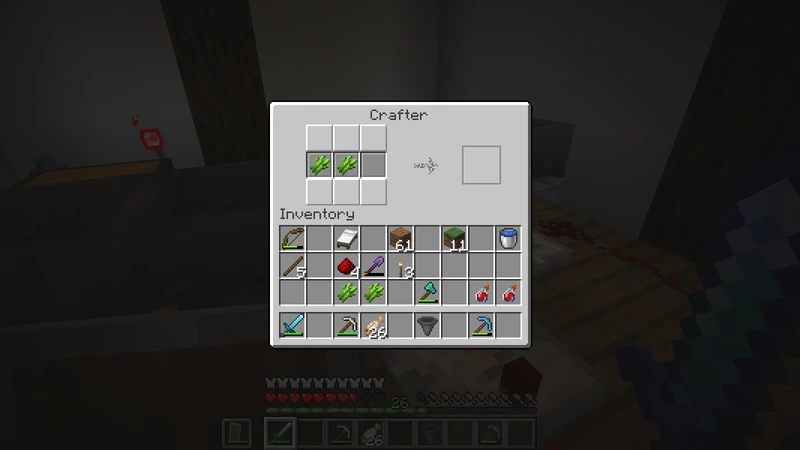
Next, two pieces.
I press the button, but nothing happens this time.
The recipe is still one piece short.
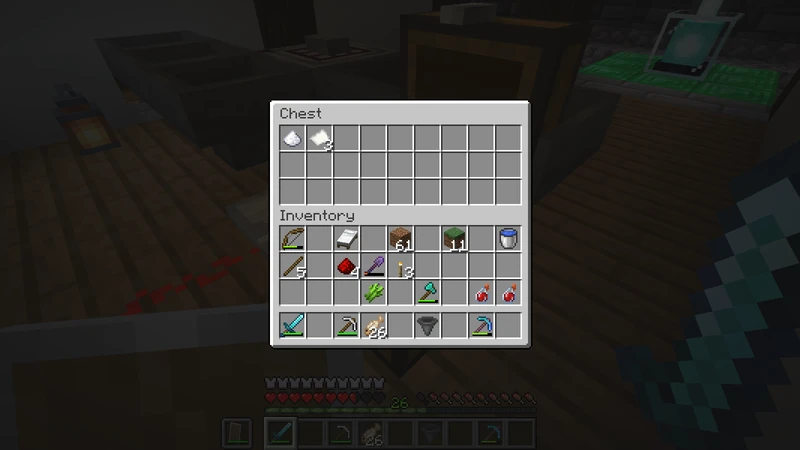
When the third piece arrives, three sheets of paper come out without a button press!
The chest holds the Sugar from the first attempt beside the new Paper.
The machine is taking over the little crafting job I did by hand.
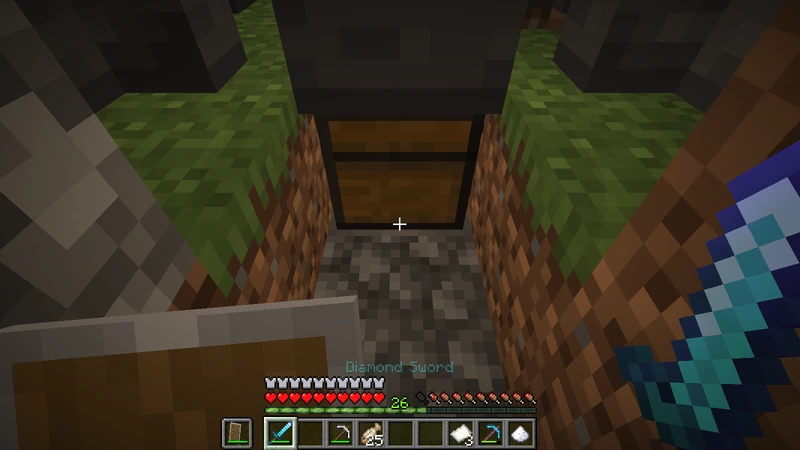
I fit a sideways hopper beneath the farm collection chest.
This is the outlet that sends the stored Sugar Cane toward the workshop.
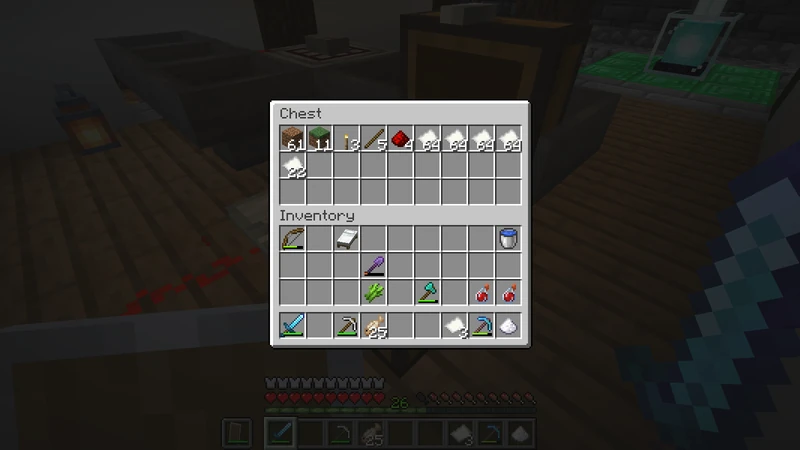
Stacks of Paper are appearing in the chest.
There are 221 sheets at the two-minute mark, and more accumulate after that.
Watching the stockpile move makes me want to keep opening the box.
Stopping at a Full Chest, Then Waiting for the Farm
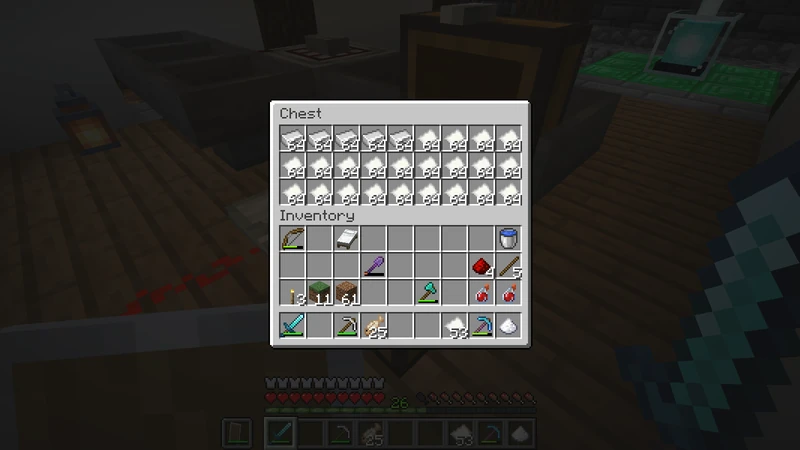
Now I try the stop for when the receiving chest is full.
Rather than waiting for Paper alone to fill it, I use five full stacks of Iron Ingots as ballast.
That is why there is iron at the front of the chest.
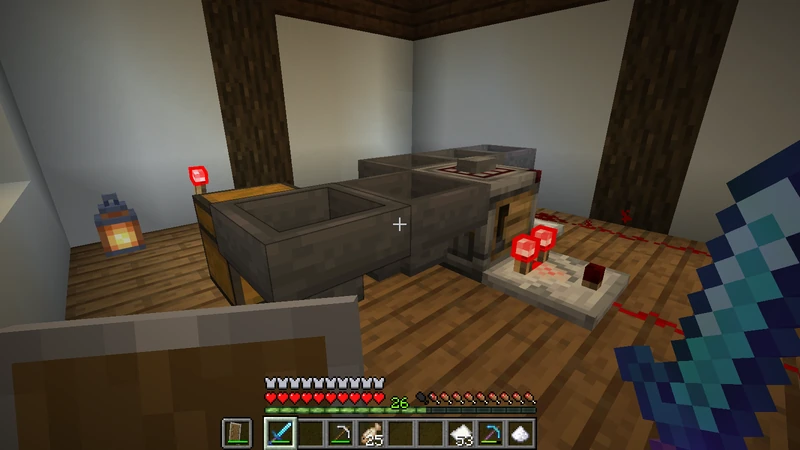
The comparator beside the chest lights up red, and the input stops.
When there is nowhere to receive the product, the ingredients wait.
That should make the workshop easier to manage.
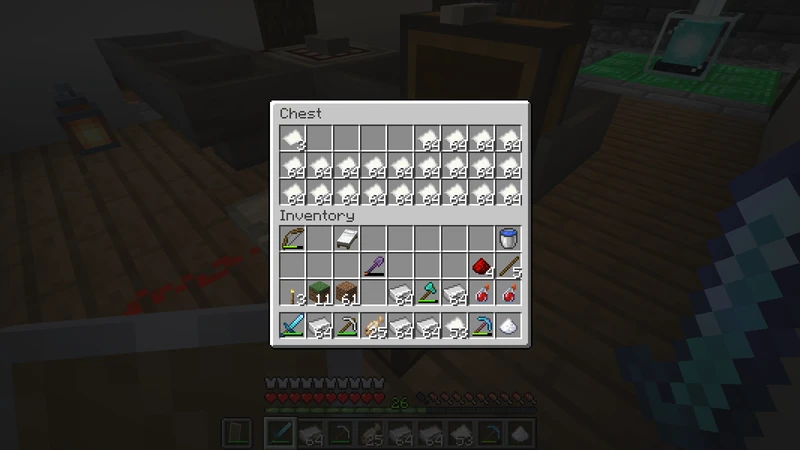
I remove the iron, and it starts again.
Three sheets of paper arrive in the newly empty space, while the five iron stacks are back in my inventory.
It can resume as well as stop.
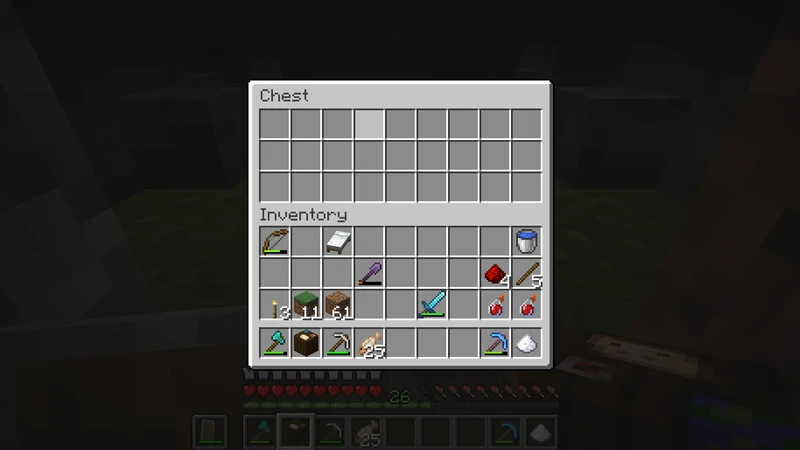
After about twelve minutes of feeding the machine, the original collection chest is empty.
That is a satisfying sight.
But this is the stored supply moving through the system, not the speed at which the farm grows.
At this stage, the farm has two Observers, one at each end.
I wait four and a half minutes for natural growth, but no Paper is added.
Making Paper and growing the next ingredients are separate things.
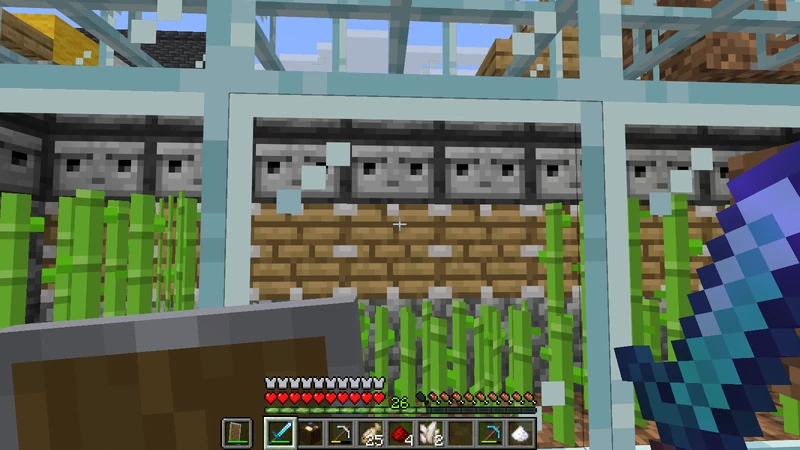
From here, this is a later visit.
The farm now has eight Observers, one for each plant, with their faces in a row behind the glass.
Without adding ingredients, I wait ten minutes for growth.
No extra Paper.
During these ten minutes, no plant reaches three blocks tall, so there is no harvest.
The crafting system works, but it cannot hurry the Sugar Cane along.
Separately, cane and redstone still remain in a minecart at the eastern end that is not connected to the transport line.
There is more work to do on collection and keeping stray items out of the feed.
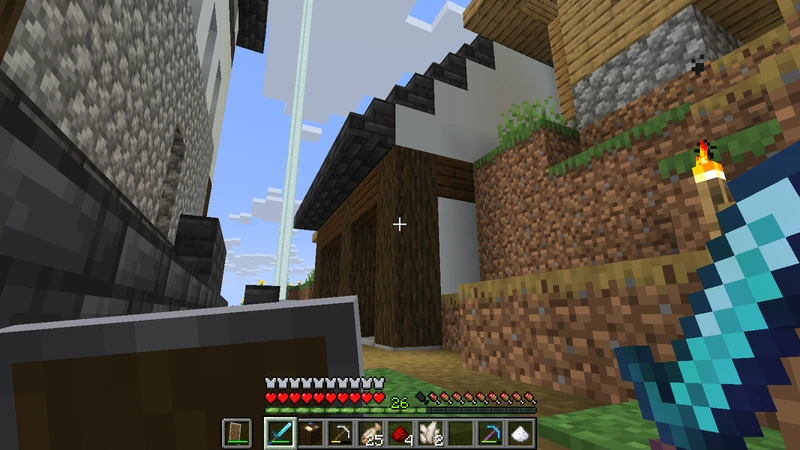
On the later visit, I walk from the dirt path around the plaza to the shop.
Between the surrounding buildings, I can see its white gable, stepped tiled eaves and dark pillars.
It is a cramped spot for standing back to admire it, but I like having another workplace in town.
I want to use the workshop while giving the collection system some more attention.
For now, this old man would quite like another look at the Paper gathering in the chest.
That is all for this time.
Greetings.