
Greetings.
I am a man in a suit who has fallen into the world of Minecraft.
Sometimes, looking around underwater makes me want to stop swimming and stay a while.
Today I’m heading to the kelp forest north of the lighthouse. I’m making an undersea observatory: somewhere I can walk down from the surface, look out at the sea, and spend the night.
I’m playing Java Edition 1.21.11.
Somewhere to Spend the Night Beneath the Sea
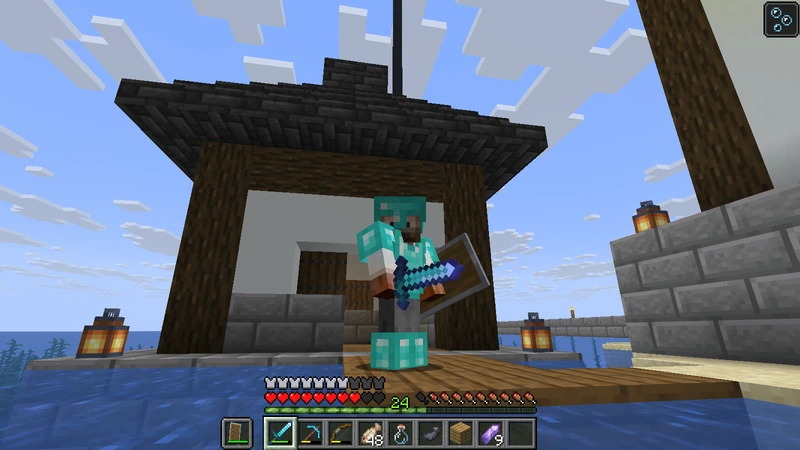
First, a picture in front of the finished entrance above the sea. This is the following day, around midday.
White walls, dark oak posts, and a dark hipped roof make it look like a little pavilion on the water. But downstairs, a glass corridor runs into the kelp forest.
Beside it is the stonework of the Japanese-style lighthouse I built in Episode 112. Next to a place for looking down over the sea, there’s now somewhere to look out from underneath it.
Let’s turn back a little, to the sea before the entrance is here.
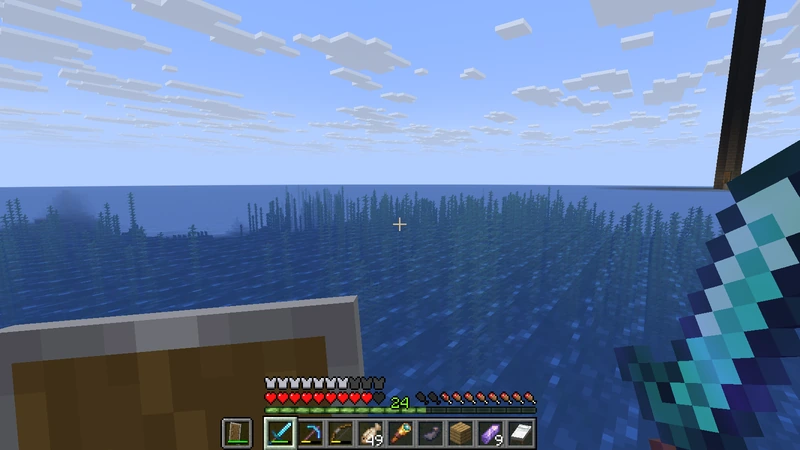
Beyond the beach, kelp grows thickly toward the surface.
This is the sea where I rode a nautilus in Episode 115. From above it’s blue water crossed by green, but underwater those tall plants become a forest in front of me.
Today I’d like to look around without having to keep swimming. A path from the beach would let me stop along the way, with a room at the end where I could stay a while. I want to connect the surface and the seabed into one place I can visit.
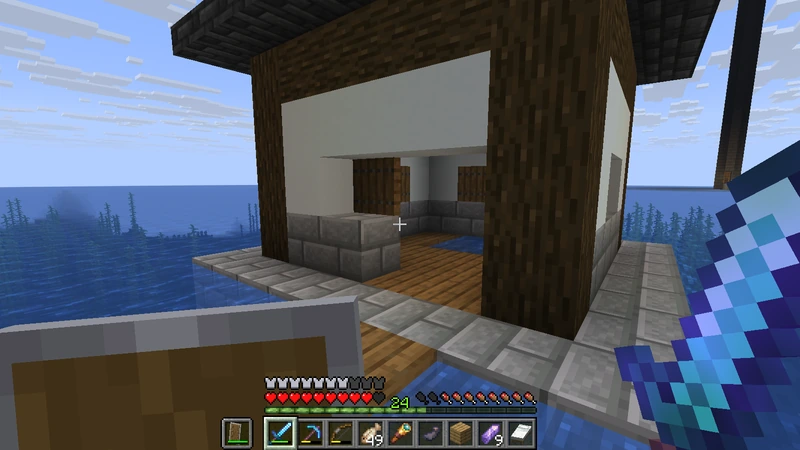
A white-walled pavilion takes shape on a stone platform above the water.
There’s wooden flooring in front and a square opening at the back, where the stairs will lead down beneath the sea. A wooden boardwalk connects it to the beach, making a walkable route right into the sheltered entrance.
An undersea observatory might suggest a large glass building, but this little entrance is all that rises above the water. The outside fits the Japanese-style lighthouse nearby, while the blue sea waits beyond it.
Standing at the entrance makes me curious about the room I can’t see below.
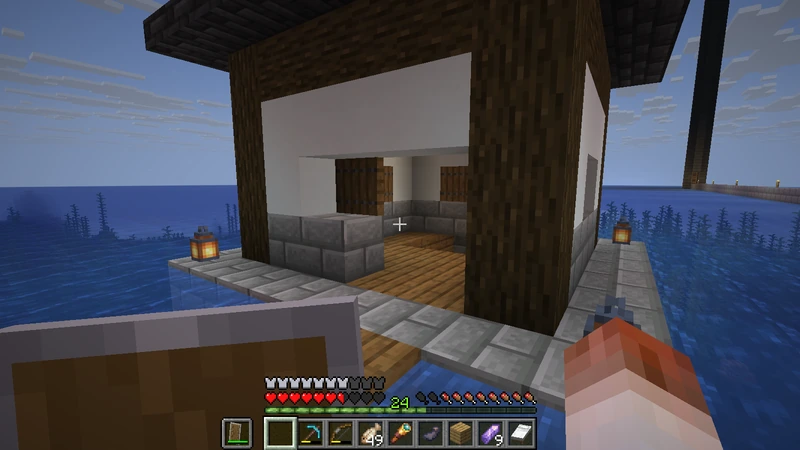
At dusk, the lanterns at the four corners of the stone platform catch my eye.
Earlier, I had crafted 14 new lanterns. With the two I already had, there are 16 in place: 11 hanging and five standing. They light the entrance, stairs, corridor, and observation room.
My health drops quite a bit that day too. I eat one cooked cod that day and recover some health naturally after the meal.
The bright seaside pictures may look peaceful, but the man visiting it isn’t quite as comfortable as the scenery suggests.
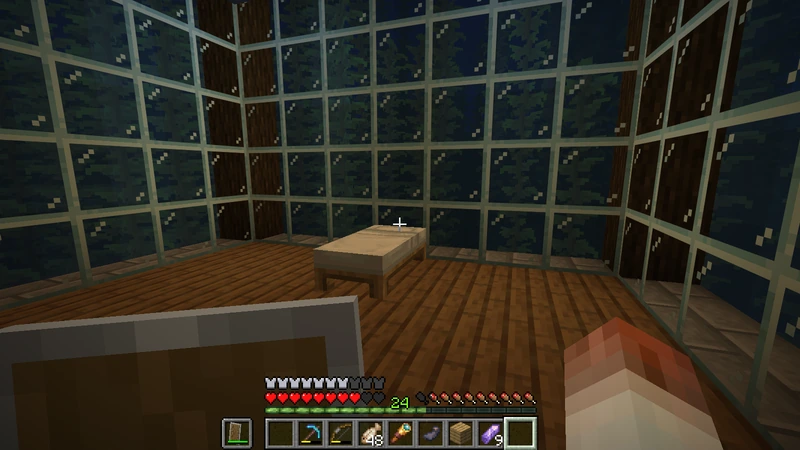
In the observation room that night, I place a bed on the wooden floor.
The walls and ceiling are glass, with dark sea and kelp beyond them and lantern light inside. There’s water overhead, yet dry wood underfoot. It’s an unusual combination.
The room for looking at the sea now has somewhere to sleep as well. I use the bed and spend a night down here.
I’m going to greet the morning in the same place where I’ve come to look at the water. Having the sea outside the windows makes it feel rather different from my usual bed.
Down the Glass Stairs the Next Morning
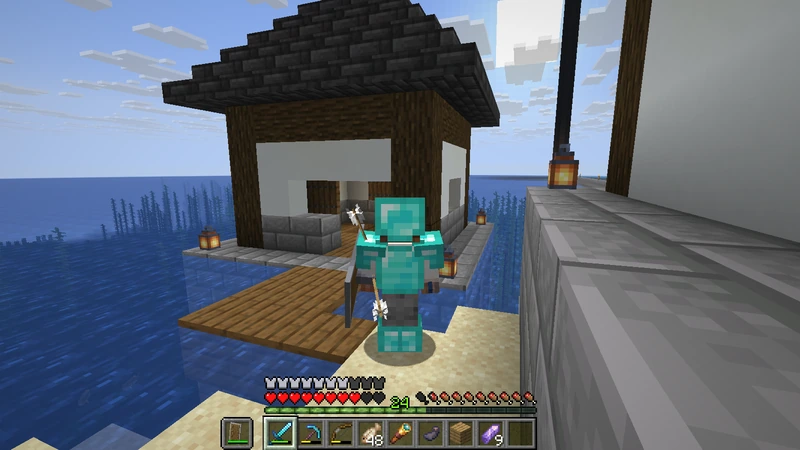
The next morning, back to the entrance.
I walk from the beach along the boardwalk toward the pavilion, with the lighthouse stonework on the right and the sea on the left. It’s a short approach, but knowing what lies beneath the roof makes it look a little different from yesterday.
And there are two arrows in my back. Quite an impressive rear view, really.
I still don’t know who shot them or where. This morning I’m following the walk from the beach to the room, watching the view change along the way.
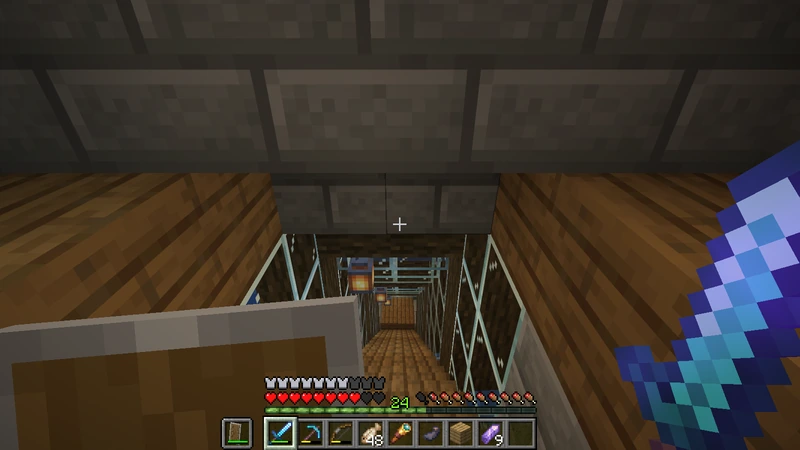
At the back of the pavilion floor, wooden stairs and hanging lanterns lead downward.
From outside I could only see a little roof. Now there’s a path into the sea beneath my feet, and the entrance takes on a different character.
As I walk down the steps, the blue water outside the glass fills more of the view. I’m not swimming up and down to reach the surface; I can simply use a staircase to go below it.
I follow the lanterns toward the bottom.
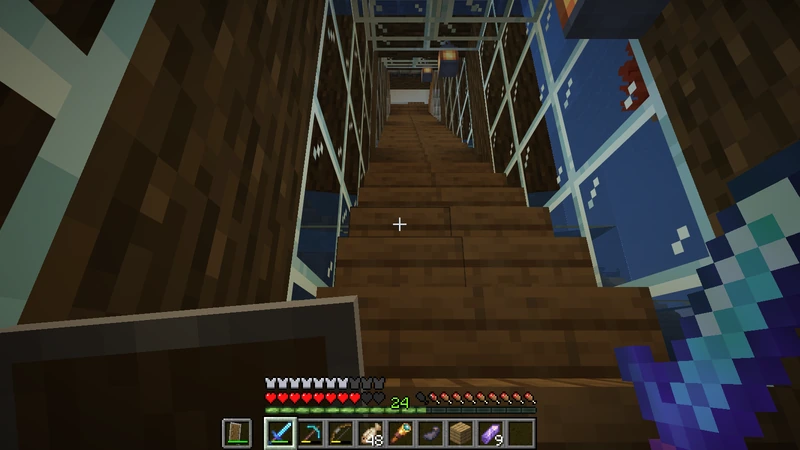
Looking back from below, I can see the wooden steps leading to the entrance.
There are 14 steps. Wood, dark oak frames, and warm lantern light run through the blue water beyond the glass. Being able to look up toward the entrance makes the way down easy to picture.
Outside is the sea, while the path stays dry. Even knowing there’s glass between us, having water across so much of the view makes this feel unlike ordinary underground stairs.
On the way back, these same steps lead to the beach. There’s now a route into the sea and home again.
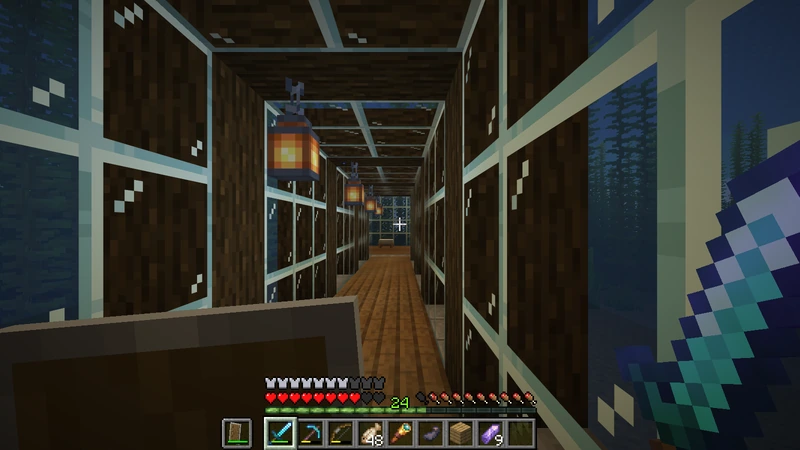
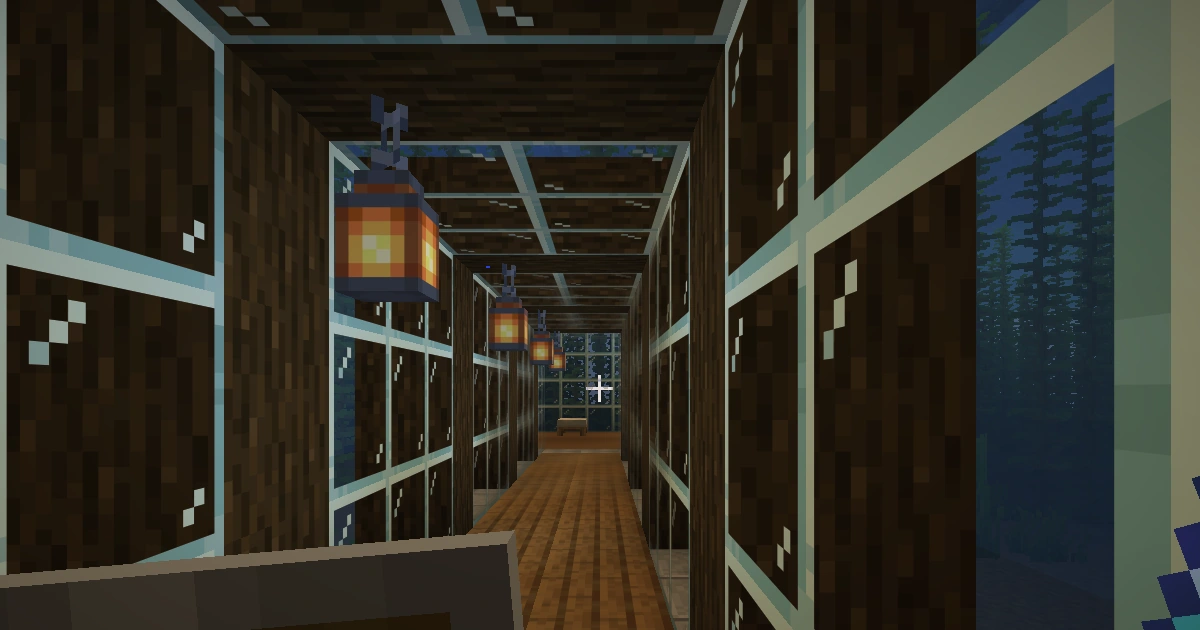
At the foot of the stairs is a straight glass corridor.
Its level stretch is 16 blocks long, two blocks wide, and three high. Walking along the wooden floor, I can see the observation room beyond the row of hanging lanterns.
Riding the nautilus, moving through the water was the adventure itself. Here I can walk on a floor and look out on both sides. It’s the same kelp forest, but having somewhere firm to stand changes the way I see it.
The path runs straight ahead, so I can head toward the room and still stop at any window that catches my attention.
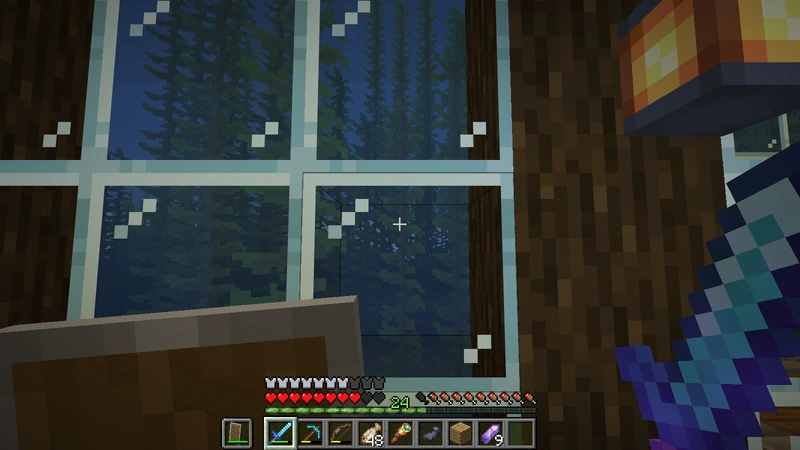
Close to a side window, I can see kelp stretching from the seabed toward the surface.
My eyes are now among the green bands I was looking down on earlier. Between the glass frames are nearby plants and blue water farther away. Rather than one sweeping distant view, this is a sea to look at a little at a time, window by window.
It isn’t a tank stocked with fish: this is the sea where the kelp already grows. Outside the corridor remains open sea; on my side are wooden flooring and lights.
The corridor has somewhere to go, but there are things worth stopping for along it too.
A Glass Room Looking into the Kelp Forest
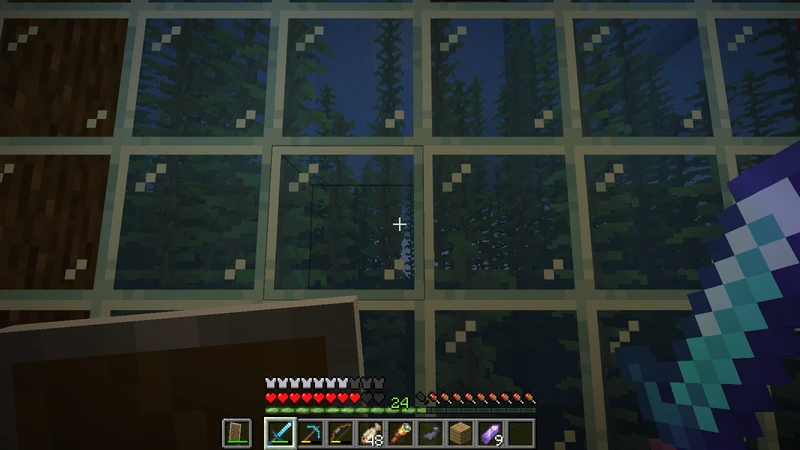
Beyond the corridor, the view opens sideways and overhead.
The observation room measures nine by nine blocks outside, with a seven-by-seven interior and a height of five blocks. Coming from the narrow passage makes the glass-walled space feel especially open.
There’s kelp ahead, and when I look up, sea above me too. A lookout on land lets me see into the distance; this room lets me take in the feeling of being surrounded by water.
I change where I’m standing a little and look around the windows and ceiling.
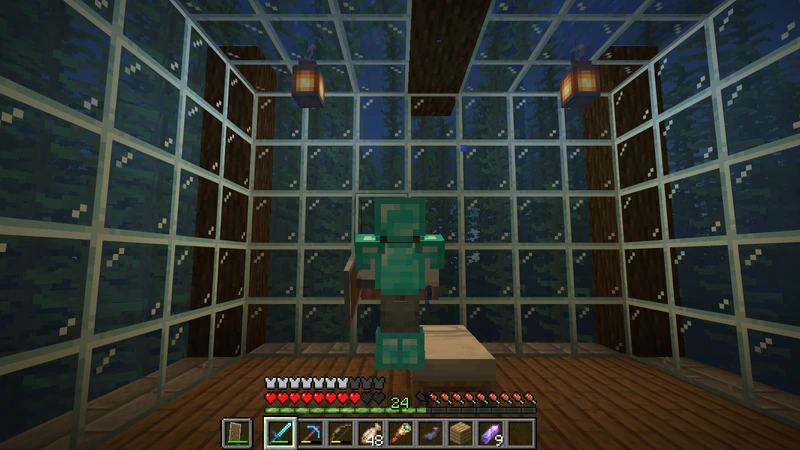
The rear view makes the difference between inside and outside especially clear.
The bed I used last night is at my feet, with hanging lanterns to either side and tall kelp just beyond the glass. Although the narrow corridor leads here, this is somewhere to stay rather than simply pass through.
At night I sleep with dark water outside; in the morning I look into the kelp forest from the same room. Spending the night joins those two views into one visit.
Come for the sea, go to sleep, and wake up to more sea. It’s a remarkably seaside place to stay.
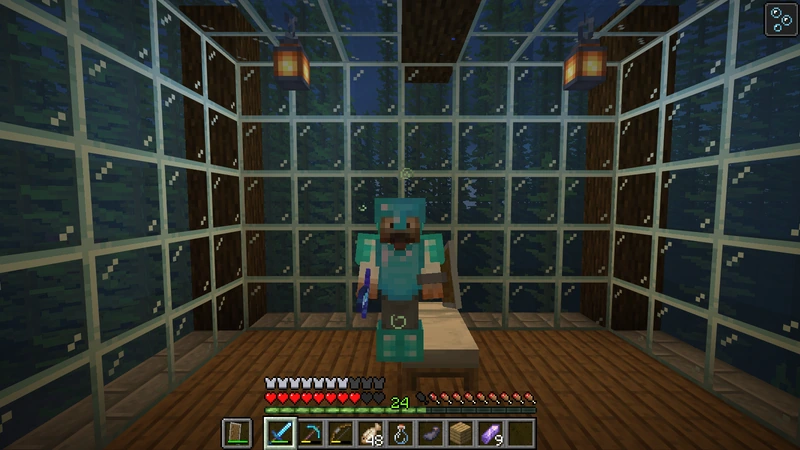
After returning to the beach, I walk down to the observation room again during the day.
Through the entrance, down the stairs, along the corridor, and this time a picture with the bed behind me. Kelp beyond the glass, wooden flooring and lights inside: a very different background from the one above the water.
Walking between the beach and the room makes the seabed feel less like somewhere distant that I can only look at. Unlike swimming out and back, I can think of coming down this same path again.
There’s now somewhere beneath the surface where I can spend a little time.
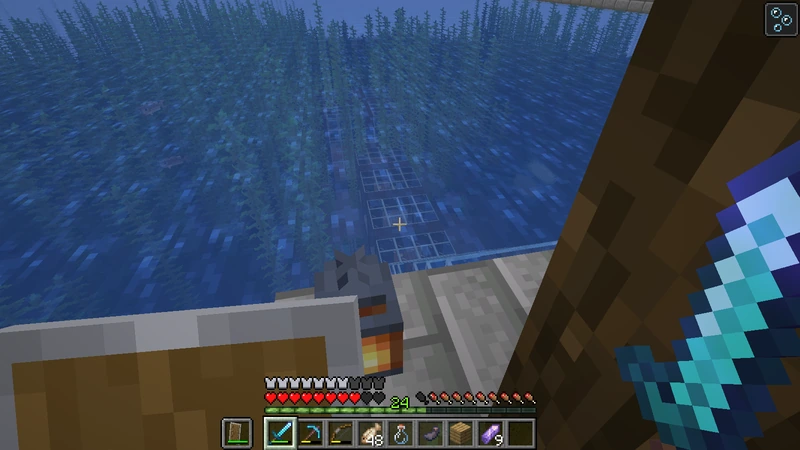
One more picture from that same daytime visit, looking down from the stone entrance platform.
Beneath the water, the glass path reaches into the kelp forest. It looks like a thin line from above, but inside are stairs and wooden floors, with a bed waiting in the room at the end.
From the lighthouse I look out across the sea; from the undersea observatory I look around while surrounded by it. The same beach now offers another way to see the water.
Next time I come here, I’d like to pass beneath that roof and follow the lanterns down again.
That is all for this time.
Greetings.