

Greetings.
I am a man in a suit who has fallen into the world of Minecraft.
Making those banners required a lot of white wool.
This time, I am building a one-cell automatic wool farm in the castle town.
The idea is that the sheep eats grass on its own, the shears activate, and the wool travels into a chest.
Will the whole chain really work…?
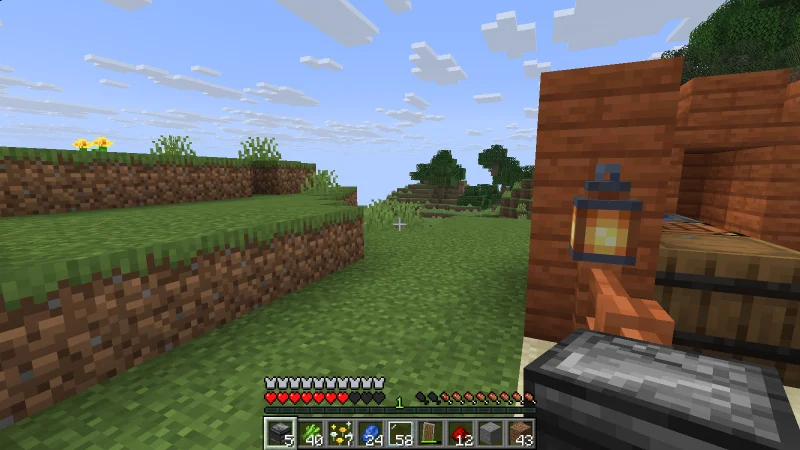
Building the observer circuit and underground collection route
I choose a grassy patch between buildings in the castle town.
This is where I begin assembling the small mechanism for a single sheep.
Below the floor, I place a hopper minecart and connect the hopper beneath it to a collection chest.
This creates a route for wool to be picked up below the grass and carried into storage.
Minecraft’s official Hopper article explains that a hopper can collect items above it and move them into the container it points toward.
The part where the hopper minecart collects wool through the grass block is something I test in this build itself.
Next, I place an observer with its face looking directly at the center grass block.
It will watch for a change in the grass.
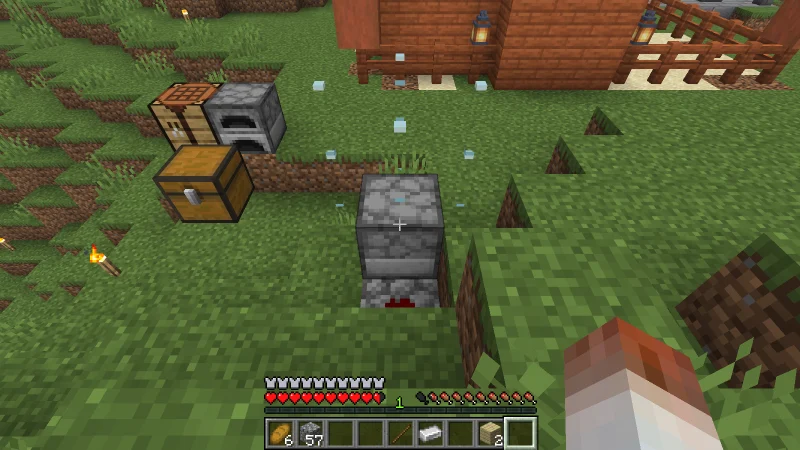
I put a sheep into the machine and surround the cell with glass.
The first resident is a gray sheep.
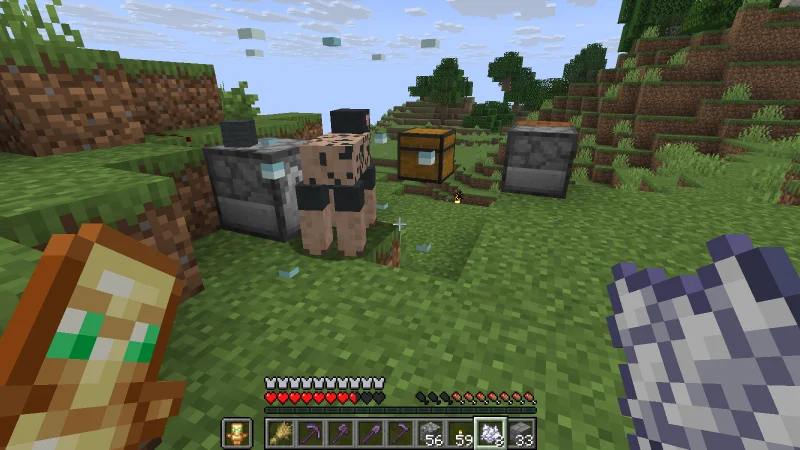
Because I want to collect white wool, I dye the sheep white.
I will keep the gray wool gathered before dyeing separate from the white wool that follows.
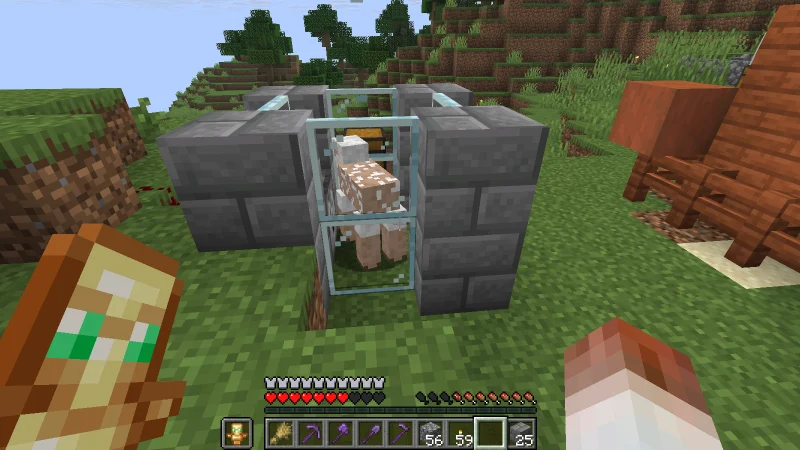
Above the sheep, I place a dispenser loaded with shears and point it into the cell.
For this particular layout, I add one piece of redstone dust so the observer signal reaches the dispenser.
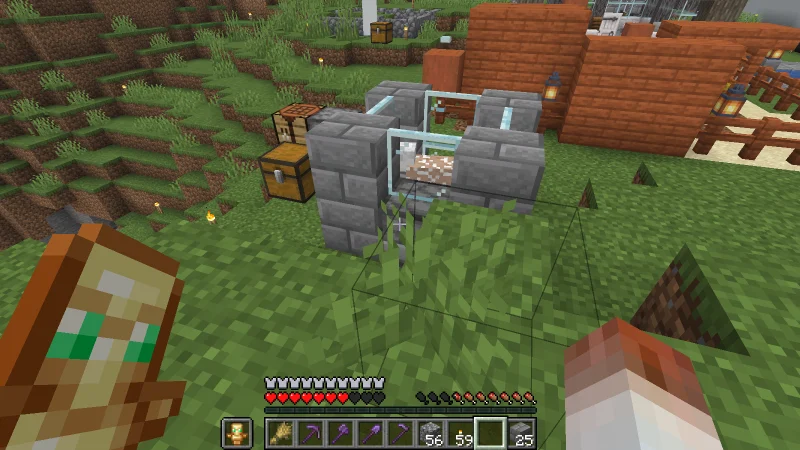
The sheep eats grass and the shears activate
Minecraft’s official Wool article says that using shears drops one to three wool blocks and that sheep regrow their wool after eating grass.
From here, I am describing what happens in this particular machine.
I wait nearby for the sheep to eat naturally.
Then the center grass block turns into dirt!
The observer detects the change, and the shears inside the dispenser activate.
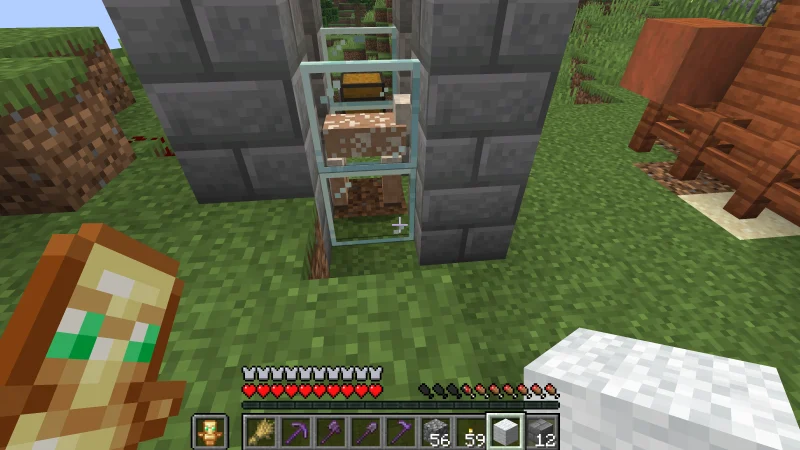
The white wool drops into the hopper minecart below the floor, moves through the hopper, and arrives in the chest.
The entire chain from eating grass to automatic collection is working.
There are four pieces of gray wool gathered before dyeing.
After the sheep is dyed, the chest contains six pieces of white wool.
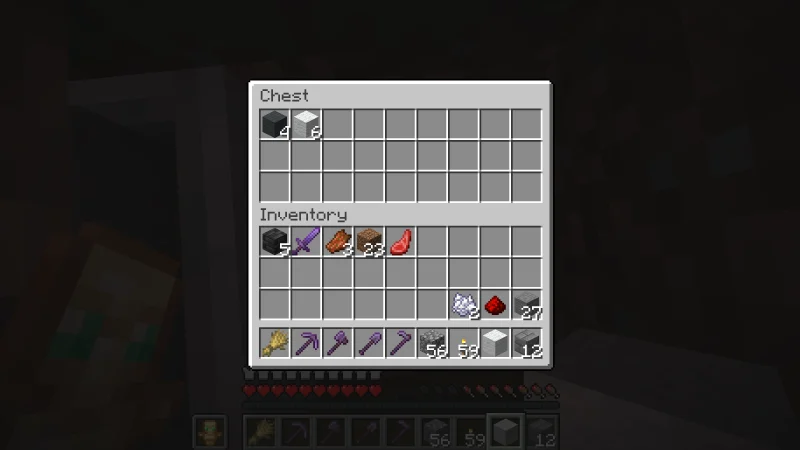
In this short observation, the white wool count rises from two to six over about eleven minutes.
That is only what I see during this run, not a promise that the farm will always produce wool at the same speed.
I also see the next grass-eating and shearing event about 24 seconds after the grass returns on this occasion.
Several conditions may affect how long the sheep waits before eating, so I will not say that grass regrowth alone determines the delay.
A small sheep hut joins the castle town
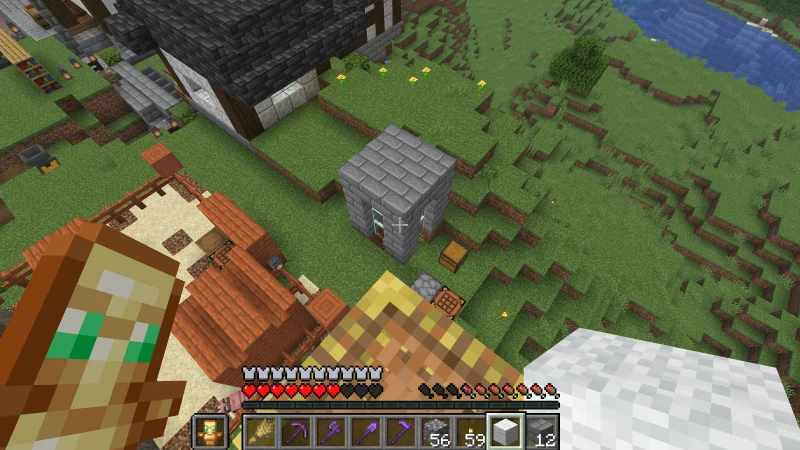
With the mechanism working, I wrap it in stone bricks and give it the shape of a little hut.
The glass front lets me see the sheep and collection chest from outside.
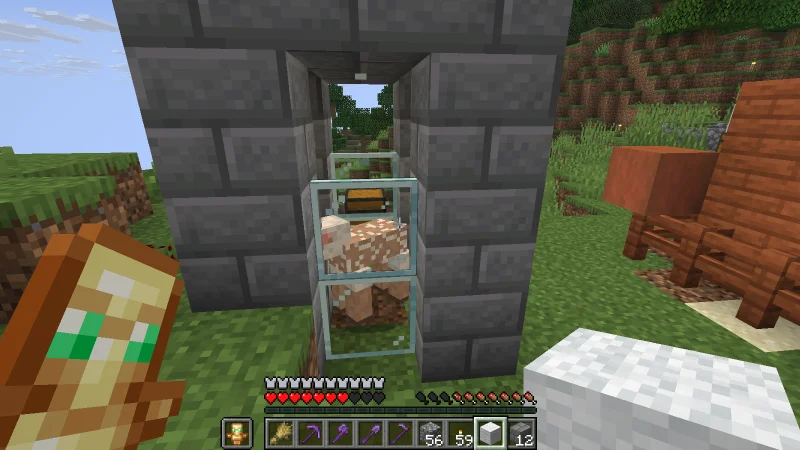
From above, the little sheep hut fits between the other buildings in the castle town.
It may use only one cell, but it is already doing its job of gathering wool.
The sheep eats grass.
The observer notices the change.
The dispenser activates its shears, and the wool travels below the floor into the chest.
Watching the entire sequence connect inside such a small hut is surprisingly satisfying.
Now I can slowly gather white wool whenever another castle town project needs it.
Finally, I hold the collected white wool and take a commemorative picture in front of the hut!

What should I add to the castle town next?
That is all for this time.
Greetings.