
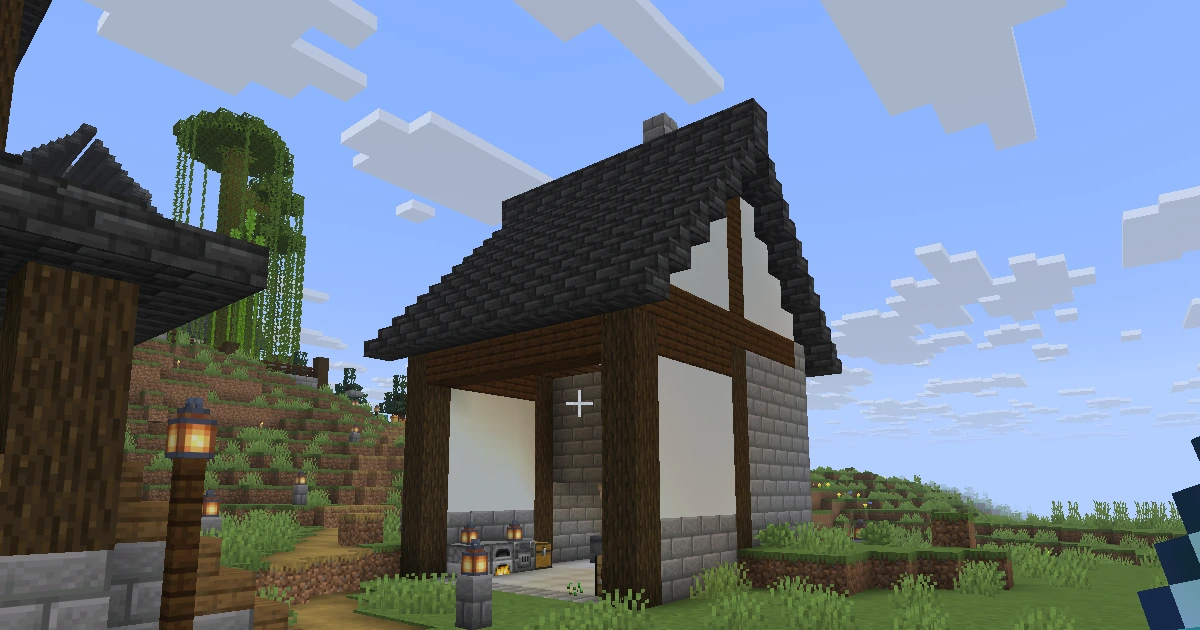
Greetings.
I am a man in a suit who has fallen into the world of Minecraft.
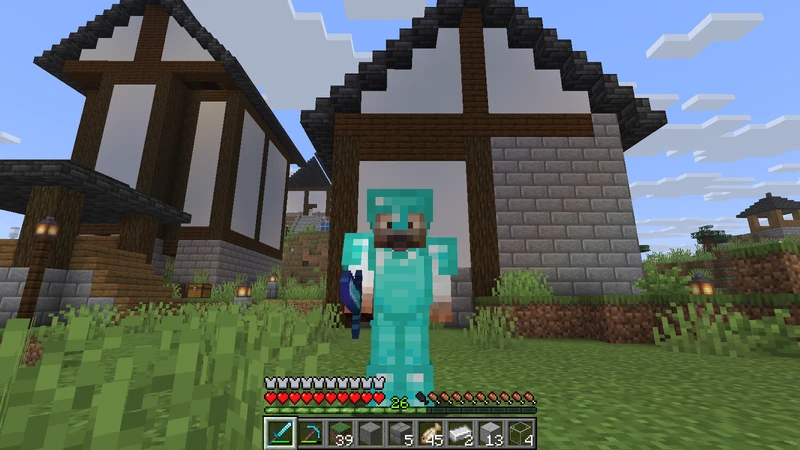
A greeting from outside the completed fuel workshop.
Inside these white walls and under the tiled roof, I will be collecting lava!
Let us go back to the preparations and see how this place comes together.
Last time, I built a Japanese-style iron farm in the castle town.
Now I want to turn some of that iron into cauldrons and collect fuel for the town.
First, though, I need to go and gather pointed dripstone.
Looking for dripstone beneath the eastern plateau
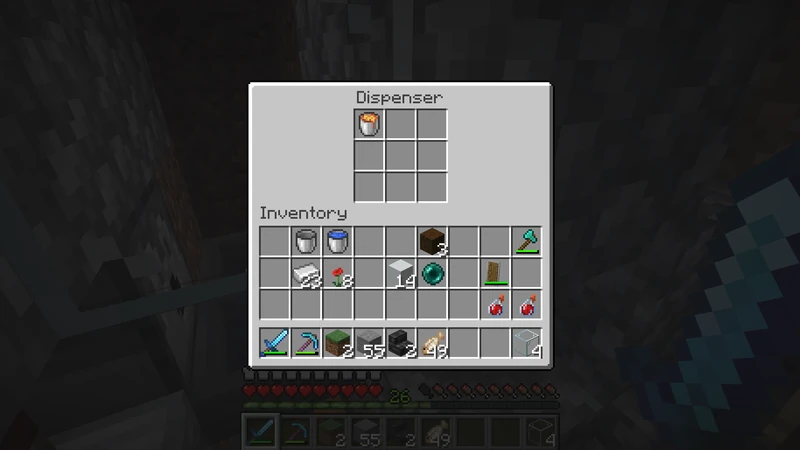
I open a dispenser in town and find the lava bucket stored inside.
This one orange bucketful is where the project begins.
I want to use it to get the workshop’s lava supply started.
I walk to the dripstone cave beneath the eastern plateau, arriving around dusk.
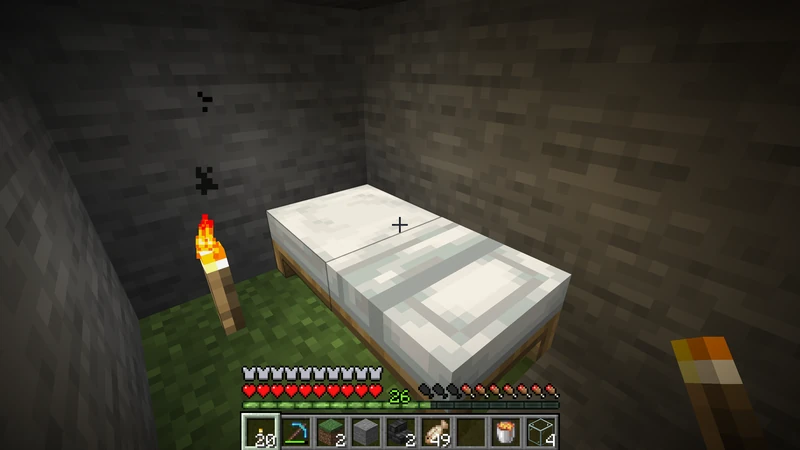
Beside the cave mouth, I build a stone shelter and put down a white bed for the night.
Even a little room feels reassuring with a bed and a light.
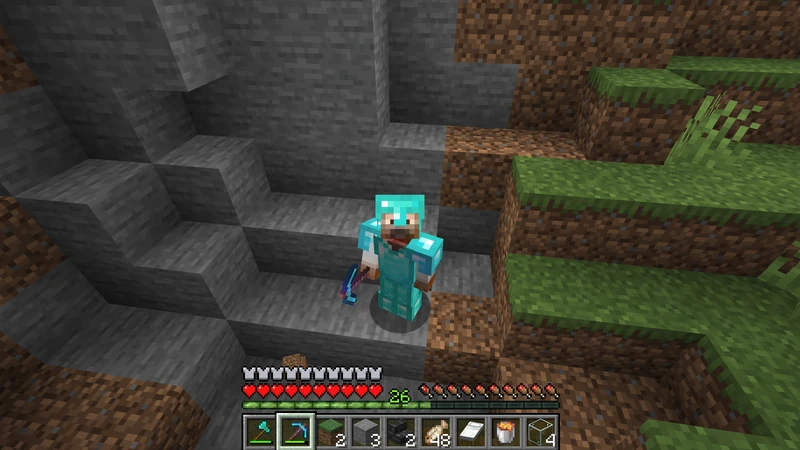
In the morning, I head to the cave entrance.
Here I am with a pickaxe, facing the stone steps.
This visit is about bringing dripstone home, rather than just admiring the scenery.
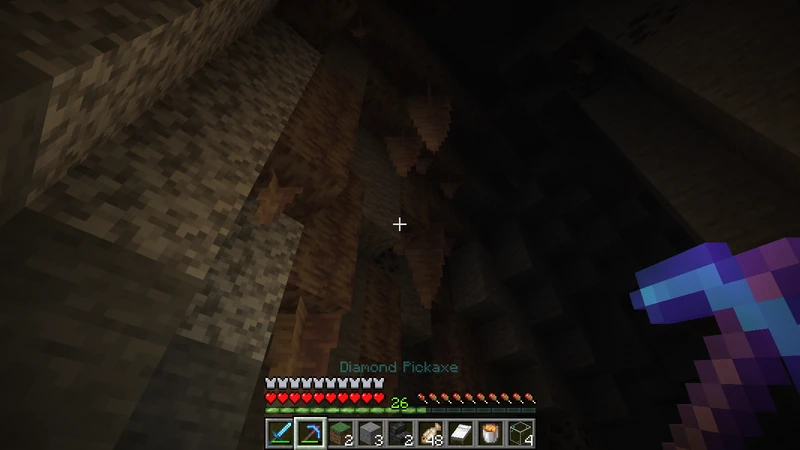
Inside, brown dripstone rises out of the gloom and hangs from the ceiling.
Looking up gives quite an impression of its size.
I gather seven pieces here and bring them back to town.
Turning the iron farm’s output into a lava workshop
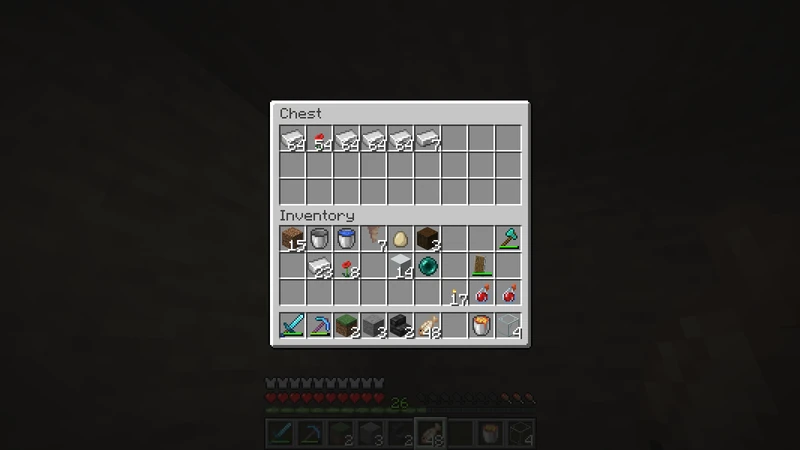
Back in town, I open the iron farm’s chest.
Seeing those stacks of iron is still a pleasure!
I take 64 ingots to make cauldrons and buckets.
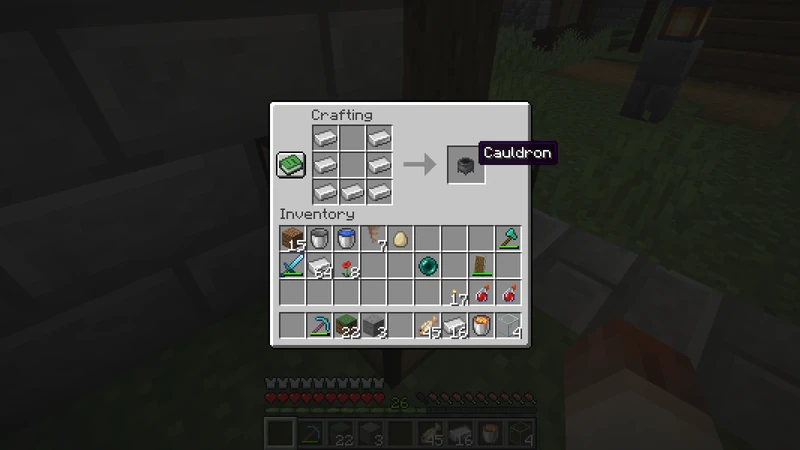
Arrange the iron in a U, and there is a cauldron.
Making seven uses a fair amount of iron, so last time’s farm is already earning its place.
The iron in the chest is becoming containers for our next supply.
Minecraft’s official introduction to the cauldron describes the same recipe with seven iron ingots.
Those are the containers I am lining up in this workshop.
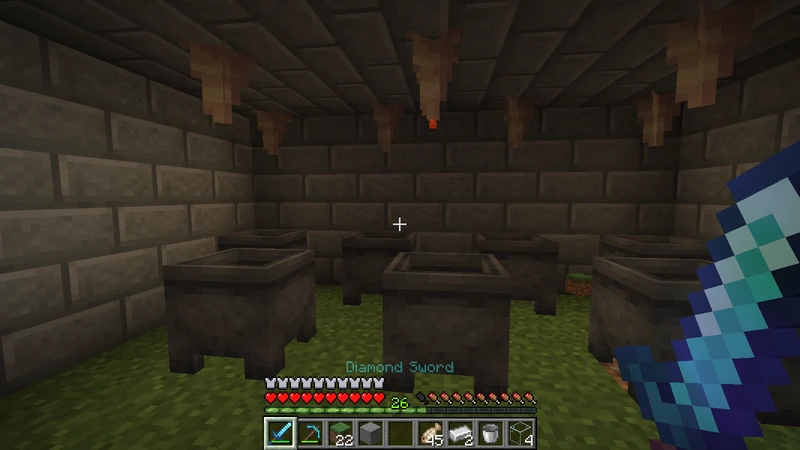
The back of the workshop holds a stone-brick structure and rows of cauldrons.
Above them are compartments for lava, with downward-pointing dripstone underneath and cauldrons below that.
For now, the containers are all lined up on grass. Heh.
I enclose the area one block above the lava with stone as well.
With wooden pillars and white walls around it, I want to take care over where the hot stuff goes.
The official article about dripstone also describes its ability to collect liquid in a cauldron below.
Time to pour in that first bucket from town and see what happens here.
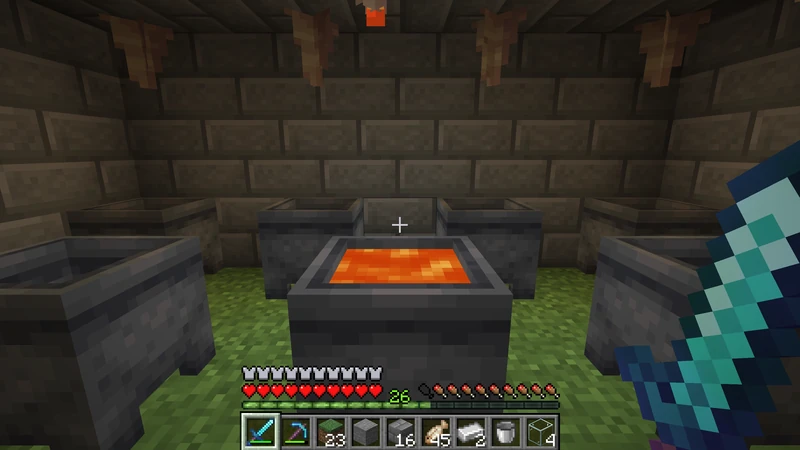
After a while… oh, there is lava in the cauldron!
An orange drop hangs above it, too.
Seeing that color in a container that was empty makes this place feel like a working workshop.
I scoop the collected lava up with a bucket and pour it into the next compartment.
Repeating that brings the arrangement to seven units, starting from just one bucketful.
This time, I see six of them fill naturally; the remaining unit is assembled and supplied with lava, but I do not see it fill.
Using the collected lava to smelt the workshop’s floor
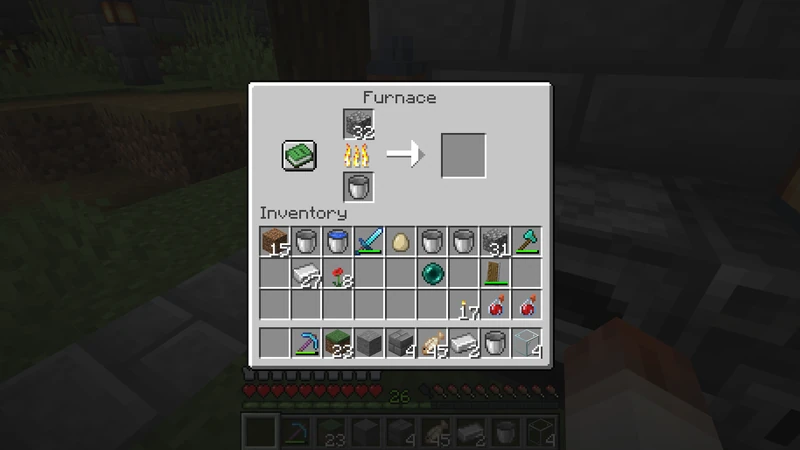
Now the collected lava goes to work as furnace fuel.
There are 32 cobblestone in the top slot and an emptied bucket below.
The flames are burning, and the output slot on the right is still empty.
First I smelt cobblestone into stone, then smelt that stone again to make smooth stone.
I want to finish the workshop’s floor with fuel collected right here.
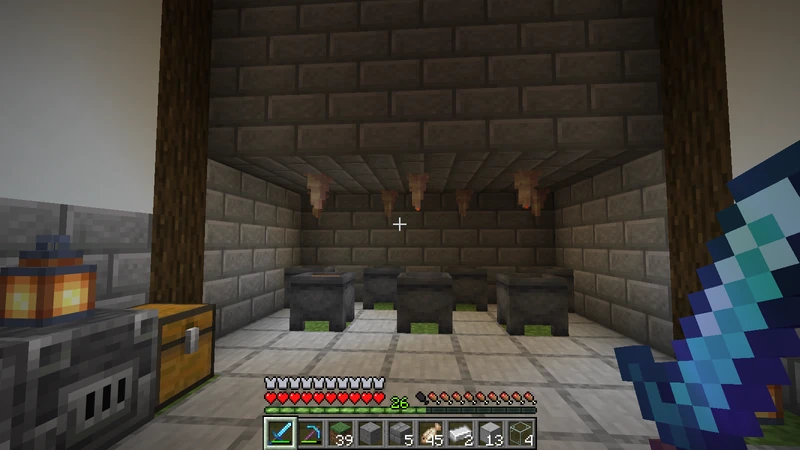
Laying the smelted blocks along the walkway and working area tidies the floor up nicely.
With the space around them finished, the cauldrons on their grass patches look more at home.
The lantern light is rather pleasant in the workshop at night.
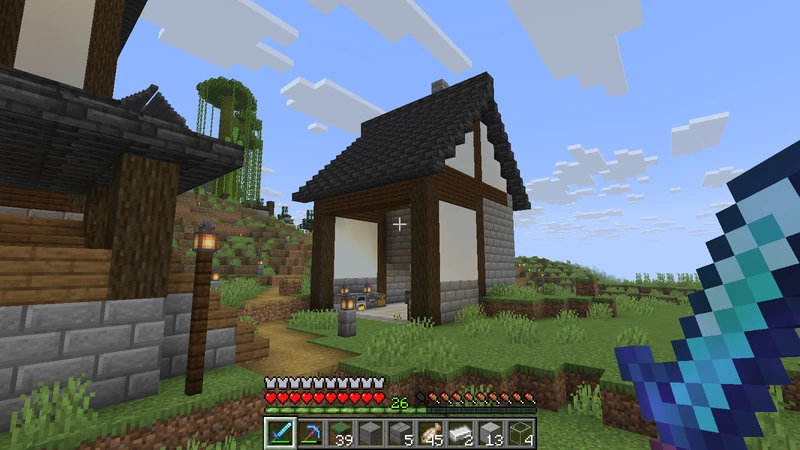
From outside, the finished building has white walls, dark pillars, a tiled roof and a chimney.
The open front lets me see the furnaces and lanterns inside.
Even a place that collects hot lava should look at home in the castle town.
The workshop stands across the road, east-southeast of the iron farm.
Having a fuel workshop near the iron supply makes the town’s everyday workings feel a little more connected.
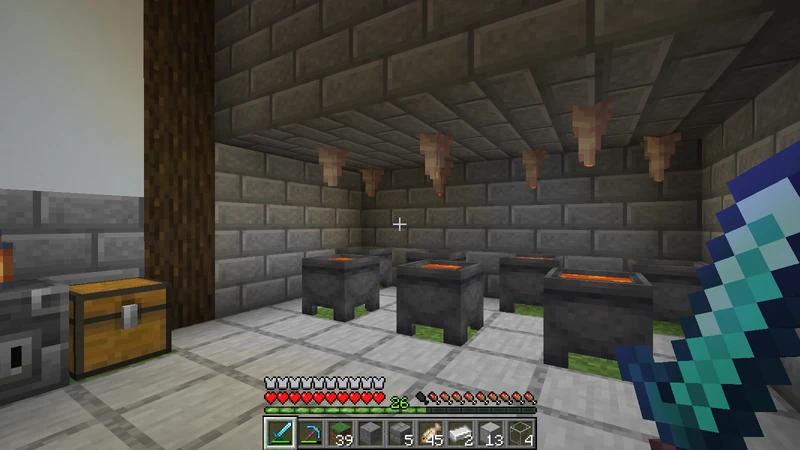
On a later visit after a night has passed, four cauldrons are full of lava.
All that orange is an encouraging sight!
The filling can happen by itself, but scooping it into buckets and carrying it to the furnaces is still my job.
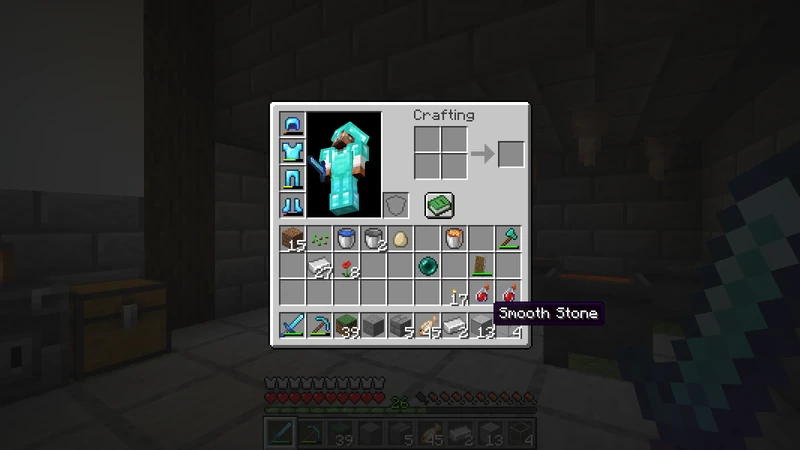
I use 50 smooth stone blocks on the floor, leaving 13.
I finish the walkway and working space without replacing all the blocks beneath the cauldrons and equipment.
The leftovers make me want to find another small job around town.
Iron from the farm becomes cauldrons, and the lava they collect helps make the workshop’s floor.
Next time I want to smelt something, it will be good to have a place to bring my bucket.
One more look at the town and its growing collection of workplaces before I head back.
That is all for this time.
Greetings.