
Greetings.
I am a man in a suit who has fallen into the world of Minecraft.
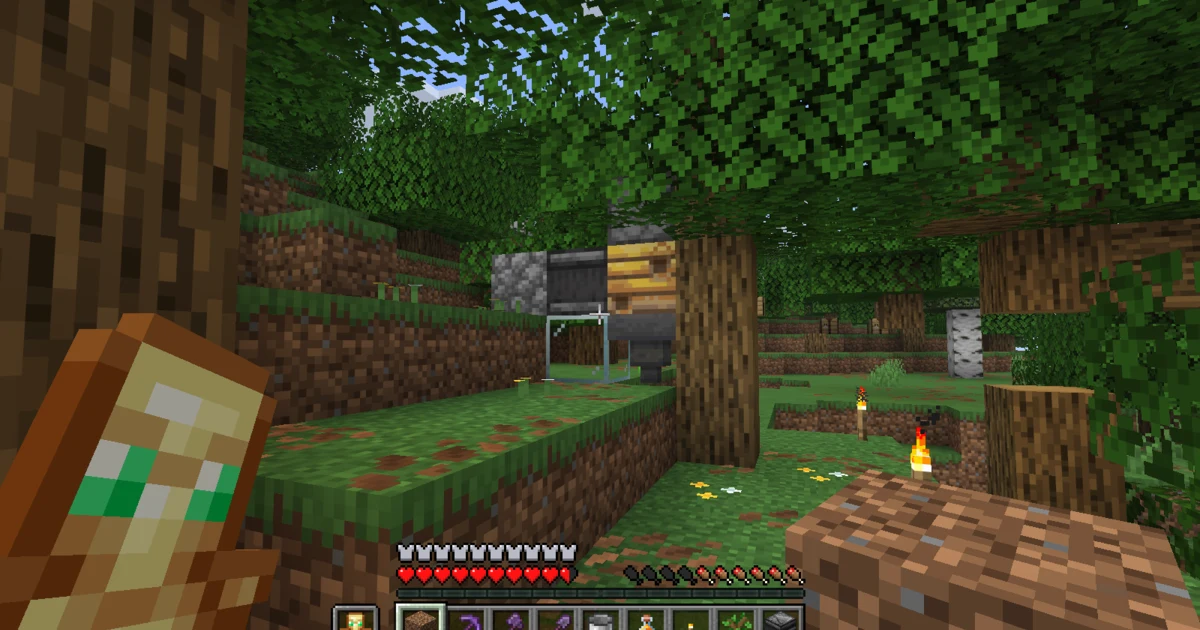
This time, I leave the castle town and head back to the forest where Season 3 began.
A natural bee nest remains in the forest where I first spotted a bee in Episode 1.
I cannot tell whether these are the same bees or the same nest from back then.
Even so, building an apiary in the forest that reminds me of my first adventure feels a little like coming home.
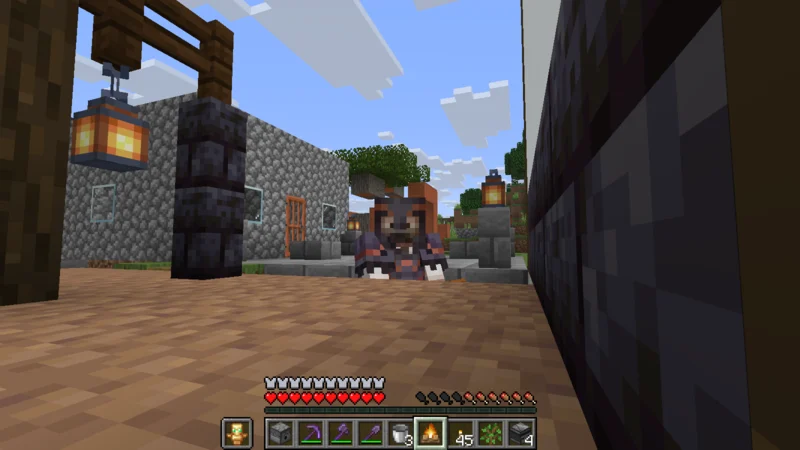
Returning to the natural nest in the forest where Season 3 began
I make my way between the trees and arrive in a familiar forest.
First, I give the forest and its bees a deep bow.
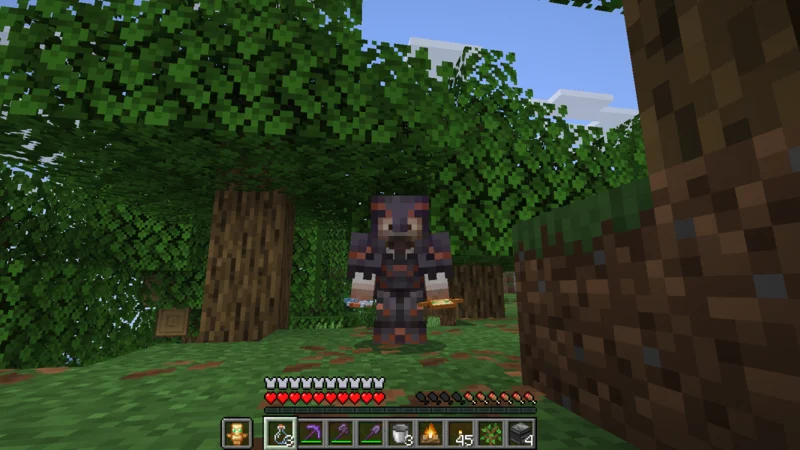
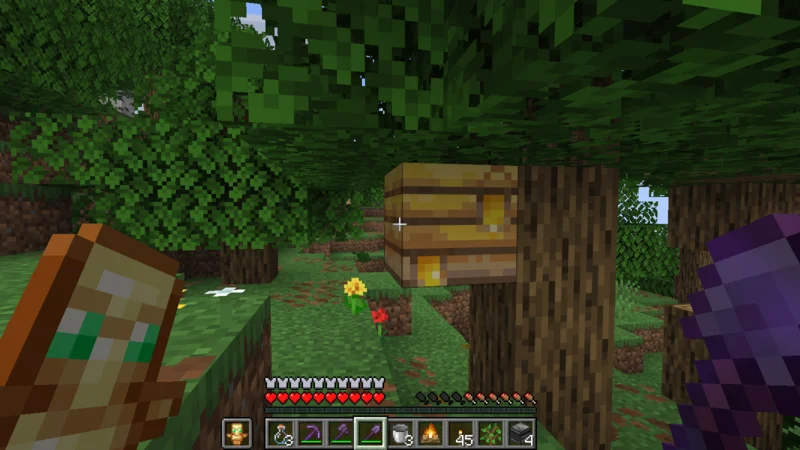
A natural bee nest hangs from a tree trunk, with adult bees flying nearby.
I see three bees this time, and I will use the nest right where it is without breaking it.
I do not have a Silk Touch tool, so instead of moving the nest, I will turn this part of the forest itself into an apiary.
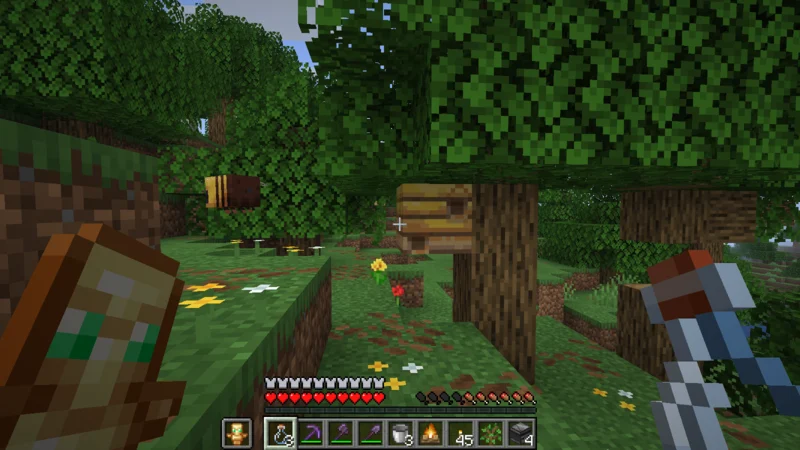
I plant flowers around the nest and watch until honey begins dripping from its full surface.
I have not measured how many minutes this takes, but during the daytime I can watch the bees traveling between the flowers and the nest.
Collecting honey bottles by hand through campfire smoke
Minecraft’s official Meet the Bee article introduces placing a campfire beneath a nest so that smoke reaches it.
The official Java Edition Snapshot 19W34A notes the use of bottles or shears on a full nest and also explains the campfire interaction.
From here, this is what I observe in today’s forest.
I place a campfire on the ground so that its smoke reaches the nest.
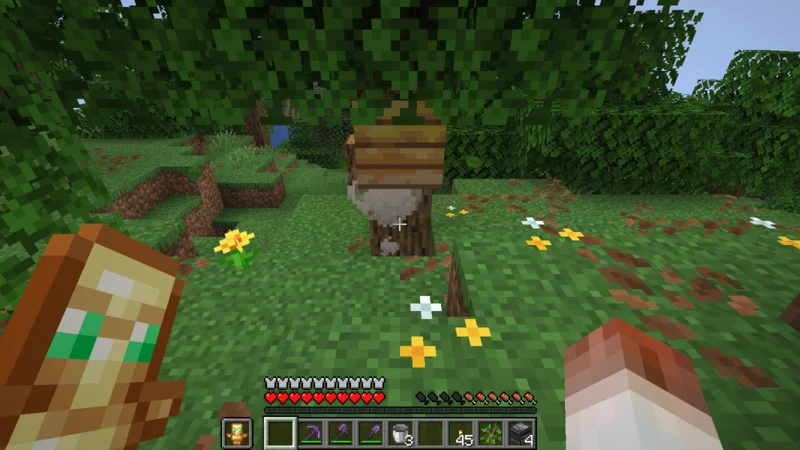
I place carpet over the campfire to make it harder for the bees to touch the flames.
After checking that the smoke is passing through, I use an empty bottle on the side of the nest.
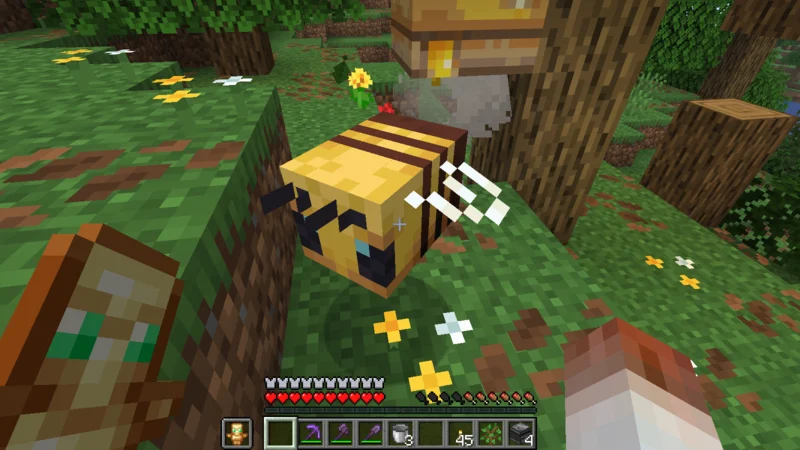
I collect a honey bottle!
None of the three bees becomes angry, and I take no damage.
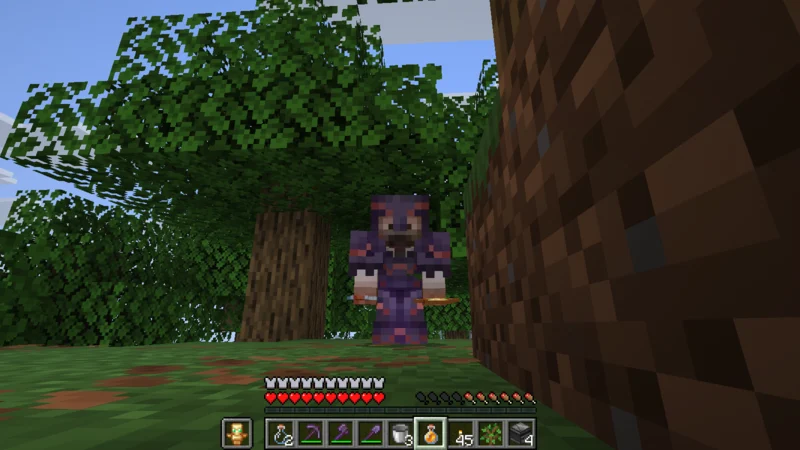
Before I finish assembling the collector, the nest becomes full once more.
To begin the automatic collection test from an empty state, I pass smoke through it again and collect a second honey bottle by hand.
Automatically collecting three honeycombs from the natural nest
Only the shearing and chest collection of honeycomb are automated here.
In this build, an observer sends a signal to a downward-facing dispenser, which uses the shears placed inside it.
Below the nest, I place a hopper and chest to catch the honeycomb.
Planting flowers, collecting honey bottles, and replenishing the shears all remain manual jobs.
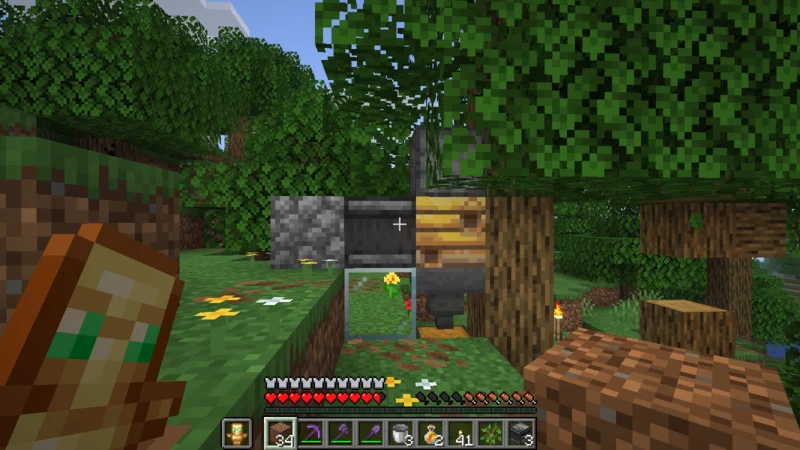
For the first proof, I begin with the collection chest completely empty.
Now I watch the bees work until the nest becomes full.
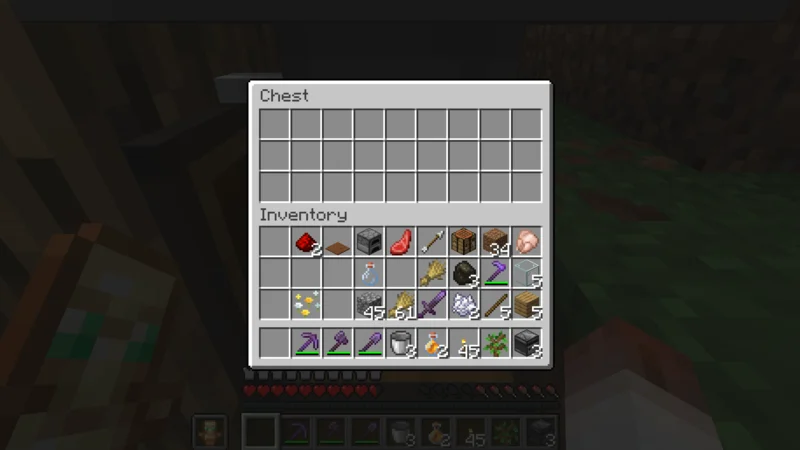
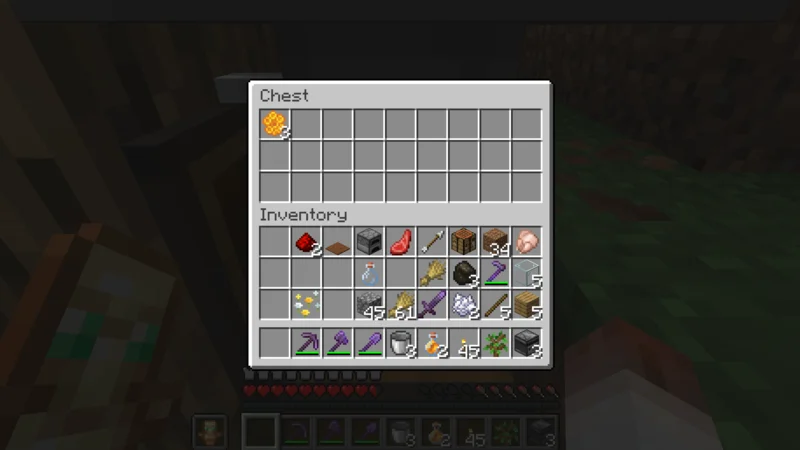
When I open the chest after waiting for a while, the previously empty chest contains three honeycombs!
The shears in the dispenser have also lost exactly one point of durability, confirming one automatic collection cycle through the hopper.
This result does not tell me how long every full cycle takes or how much the apiary produces in an hour.
For now, collecting three honeycombs from an empty chest is a good first step for this apiary.
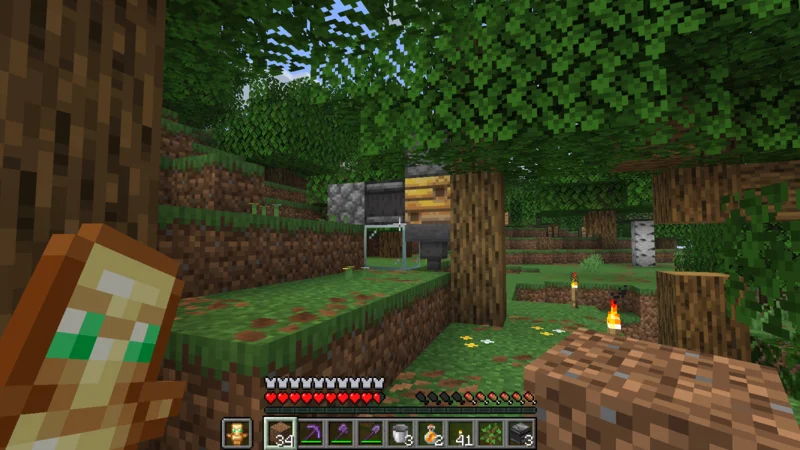
The small apiary is complete, with the natural tree and flowers still in place.
All three bees remain healthy to the end, without becoming angry or stinging me.
I return to the castle town with a honey bottle in hand.
The forest where Season 3 began and today’s castle town are now connected by one sweet bottle (laughs).
How should we use this honey and honeycomb next time?
That is all for this time.
Greetings.