
Greetings.
I am a man in a suit who has fallen into the world of Minecraft.
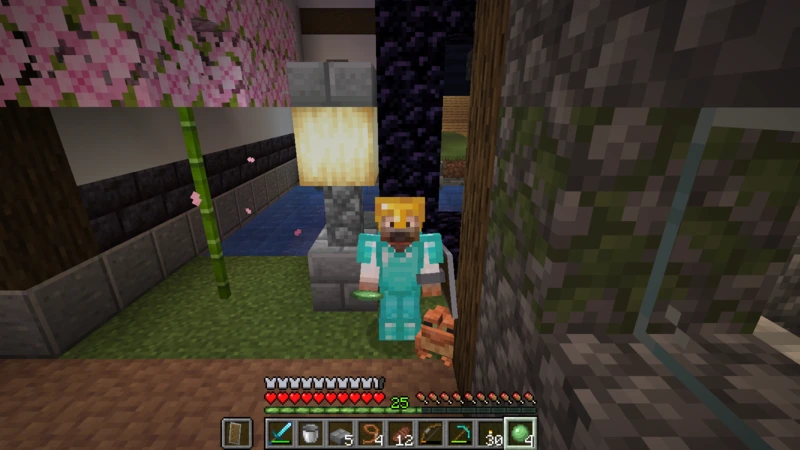
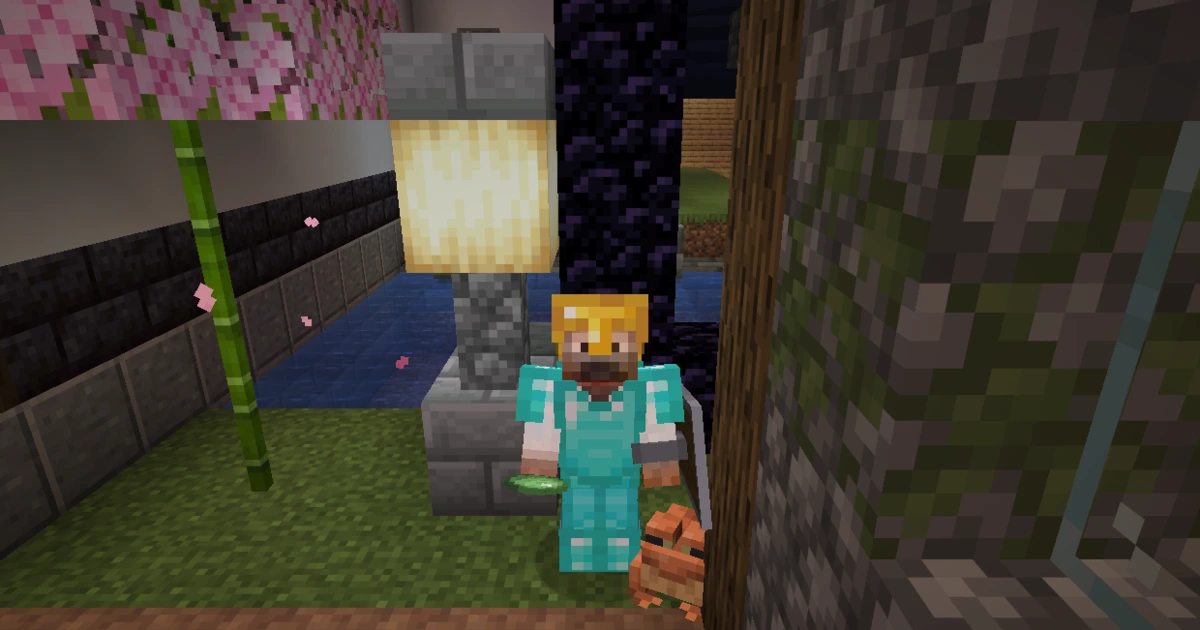
This time, I take a frog to the Nether and use the froglight we bring home to build stone lanterns by the pond.
This is a little look ahead: the first lantern is already finished here.
The frog is tucked beside me, too.
Last time, I brought two tadpoles from the mangrove swamp to our castle-town pond.
Those two little swimmers are where today’s trip begins.
The tadpoles become frogs, and one comes to the Nether
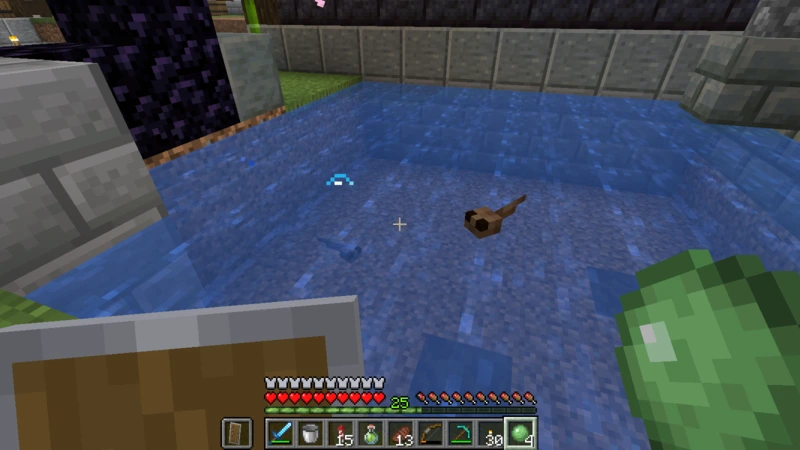
I peer into the pond, where two tadpoles are swimming.
Let’s wait for the little ones I carried home in buckets to grow up here.
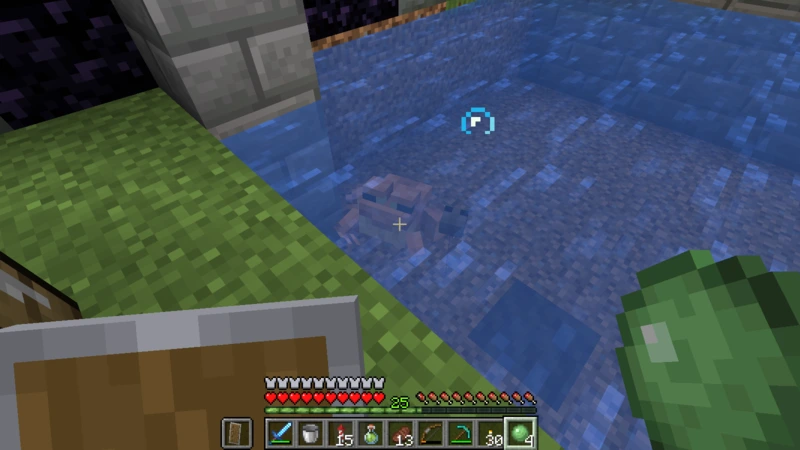
Then… there are legs in the water!
One of our tadpoles has become a frog.
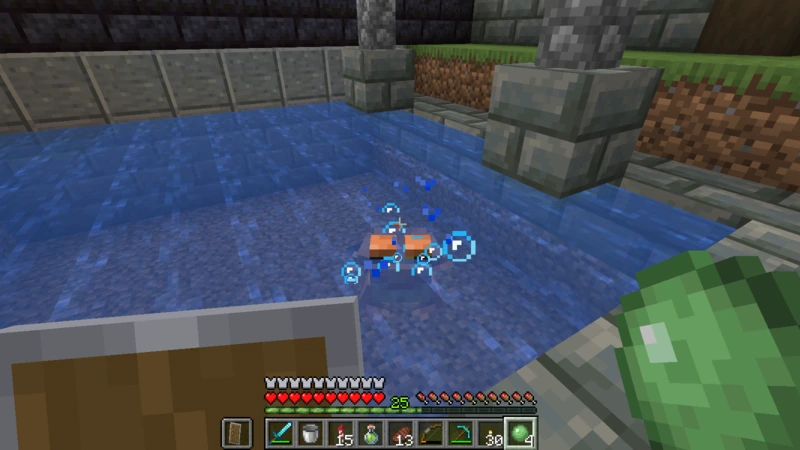
The other little swimmer lifts an orange face above the water, too.
Their parents in the swamp were white, but these two have a different color.
Minecraft’s official tadpole article explains that the biome where a tadpole grows up determines its frog type; plains produce temperate frogs.
It’s lovely that bringing them somewhere new can make such a difference.
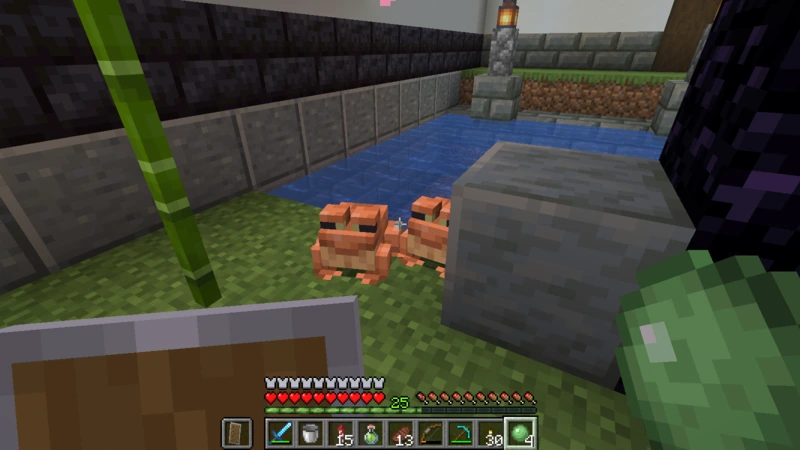
I watch the two frogs on the bank for a while.
They look quite grown up compared with the tiny tadpoles.
Today, one of them is coming to the Nether with me.
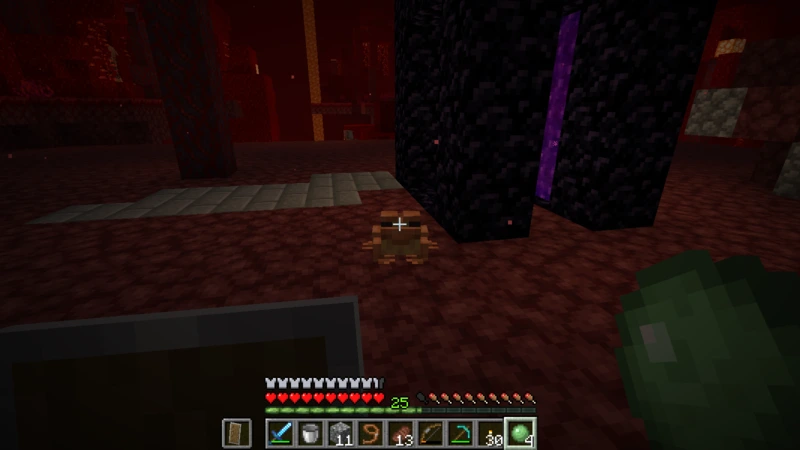
With a lead and slimeballs ready, I go through the portal.
Our frog joins me on the Nether platform.
This is a very different view from the pond!
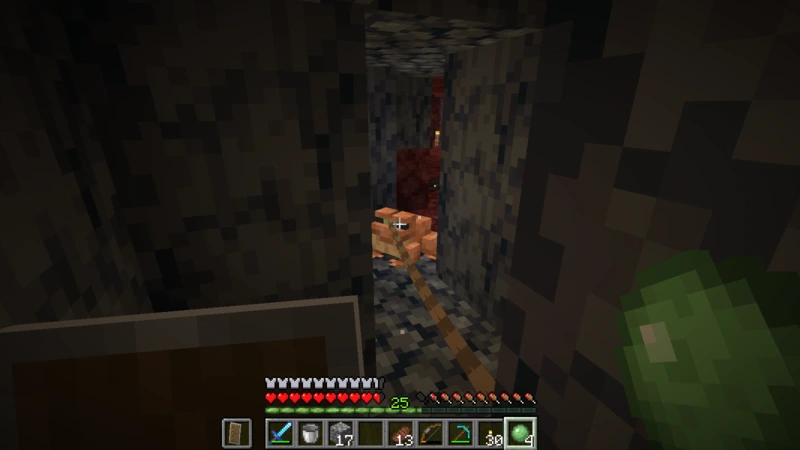
From the spiral staircase, we take the road toward the basalt deltas.
Having a frog at the end of the lead makes this feel rather different from a solo expedition.
I keep an eye on the ground as we go.
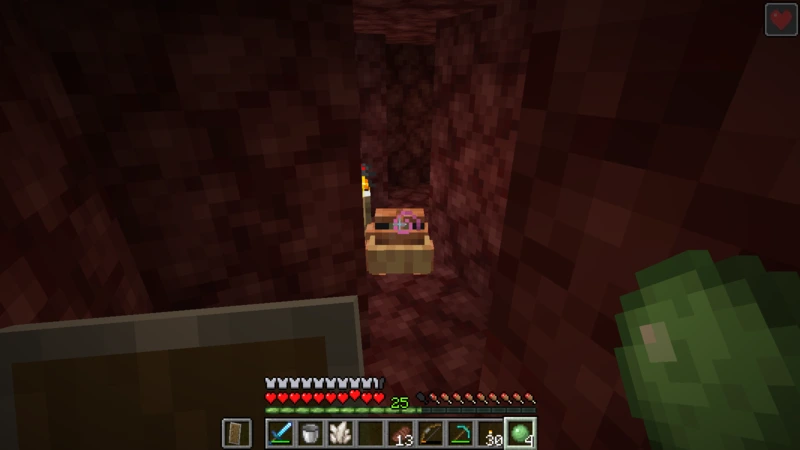
But… the frog nearly falls into lava beside the road and gets hurt.
I treat it with a Splash Potion of Regeneration brewed back in town.
If I’m bringing a companion along, I need to be more careful…
Bringing an ochre froglight home for a stone lantern
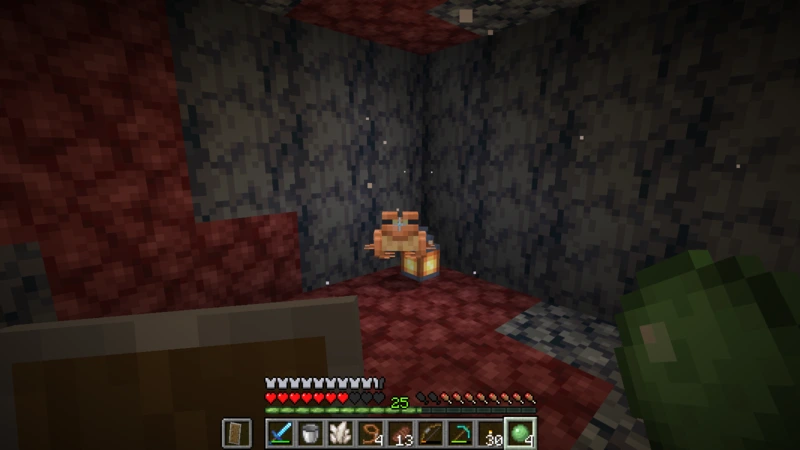
I dig a small room into the rock beside the road.
The frog goes inside, and I close the door and step away for a while.
Will we find what we came for?
Minecraft’s official froglight article explains that frogs drop froglights after eating small magma cubes, and temperate frogs produce ochre ones.
They emit light at level 15, making them useful building lights.
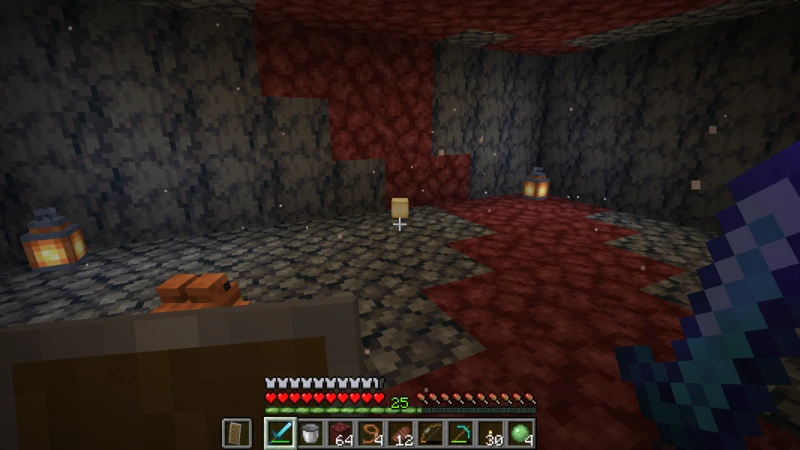
When I return, something yellow is lying on the floor.
There it is!
I miss the actual eating, but an ochre froglight is right beside the frog.
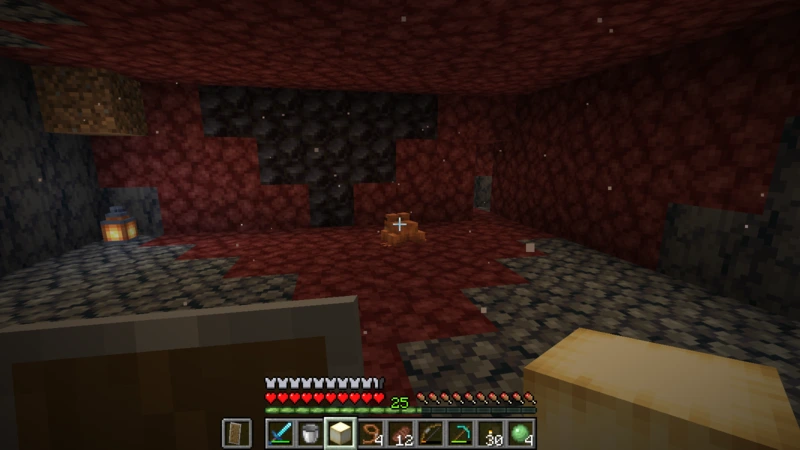
I pick it up and take a look at its pale yellow streaks.
Let’s bring it home and use it to light the pond.
Not a bad souvenir from the Nether.
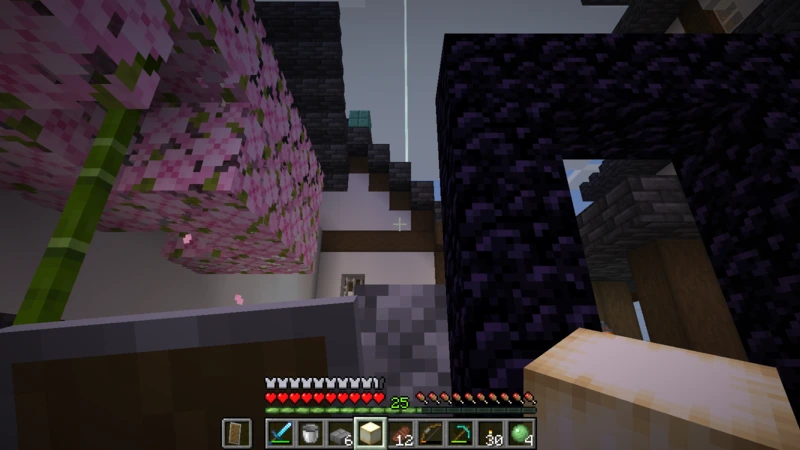
On the southern bank, I build a stone-brick base with a cobblestone-wall shaft.
The froglight goes on top, beneath a stone-brick slab roof.
Our square block of light becomes the heart of a stone lantern.
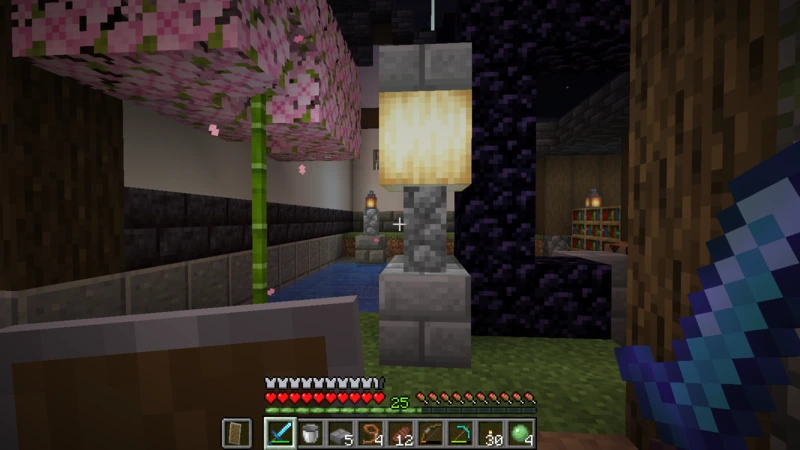
At night, the light really stands out.
The yellow glow suits the stone rather nicely.
That long trip to the Nether feels worthwhile.
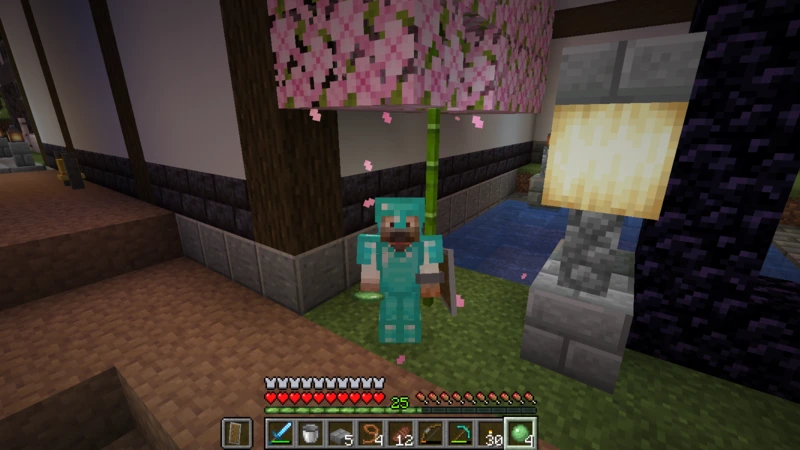
I pause by the cherry tree and look over the pond and lantern.
One new light changes a familiar little corner.
Still… now I want to see the frog eat with my own eyes.
Back to the Nether to see the frog eat
Later the same day, I take the frog back to that small room.
This time, it waits in a little hole in the floor, and I return when a small magma cube appears.
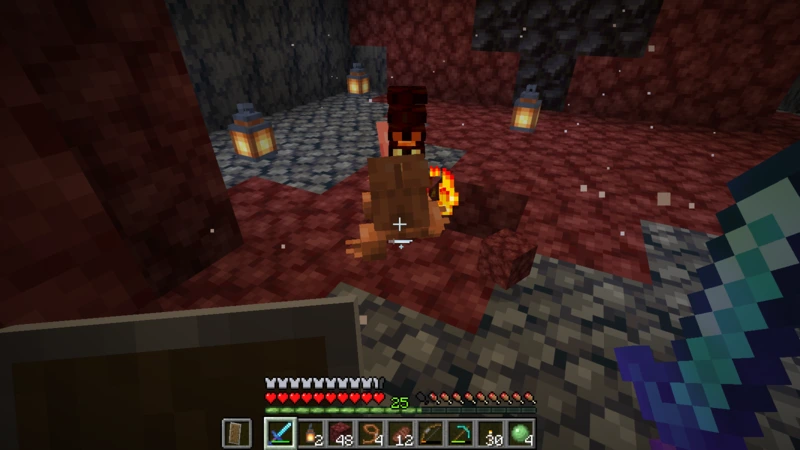
Oh!
The frog rises up and shoots out its pink tongue.
It catches the little magma cube right in front of it.
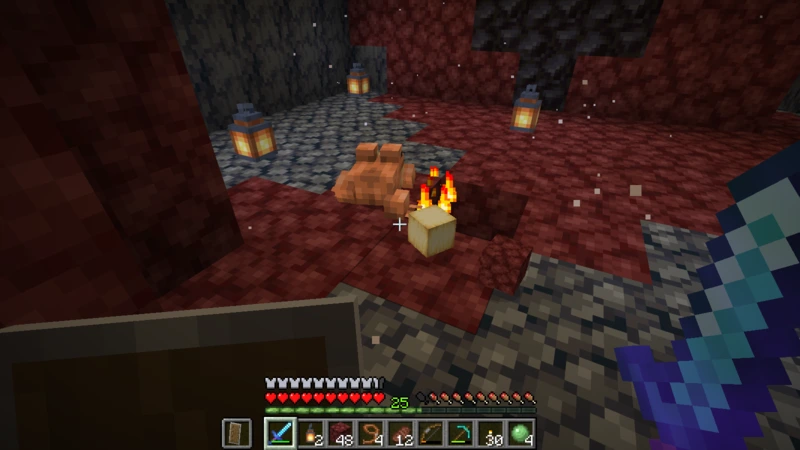
Once it swallows the cube, a froglight falls at its feet.
This time, I see the eating and the light appearing!
During this return visit, I collect four froglights to take home.
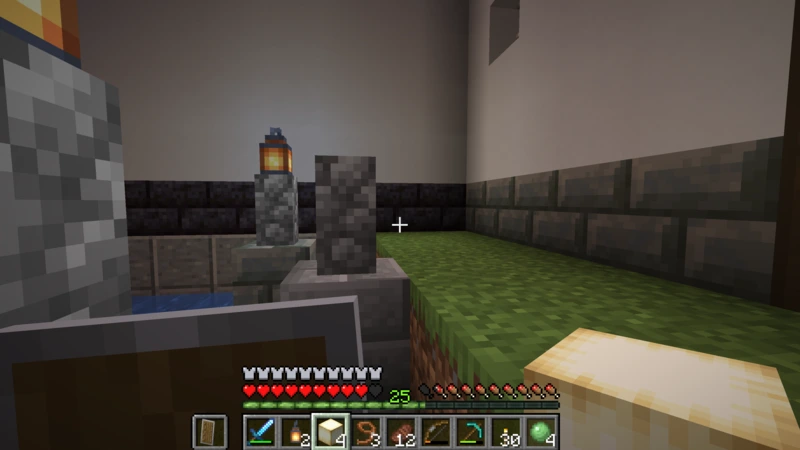
Back home, I build another lantern the same way on the northern bank.
It goes between the two smaller lanterns already there.
One of the four froglights goes here.
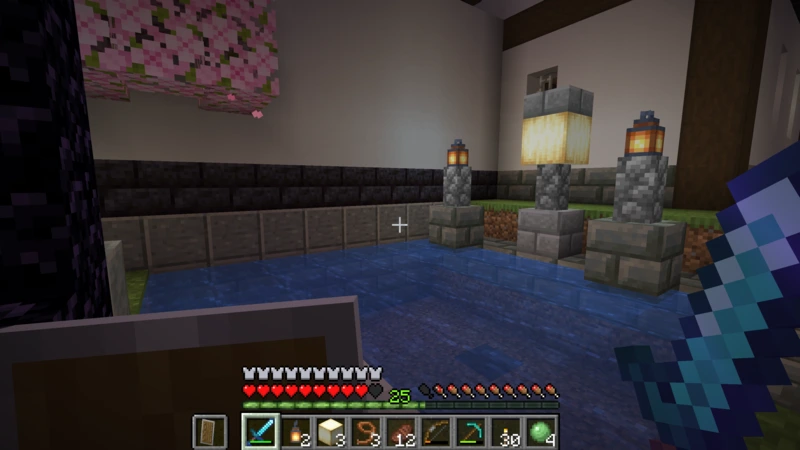
Small, tall, small: the lanterns line up along the water.
The bright middle one catches the eye from across the pond.
I have three froglights left.
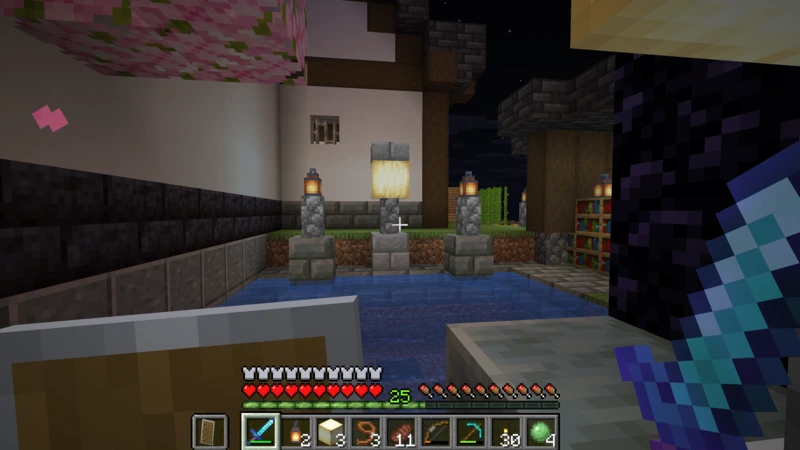
From beneath the southern light, I look across at the northern lanterns.
The pond where I released those tiny tadpoles is brighter now, thanks to a frog.
It might be fun to wander the town at night and think about where the remaining lights could go.
That is all for this time.
Greetings.